
Is Double Exposure a True Life Is Strange successor?
I’m a lesbian… is what I would say if I was Arcadia Bay’s prime delinquent Chloe Price. Jokes aside, If I could rewind time, I would use my power to go back to situations where I thought of witty comebacks only after the conversation had finished and I’d walked away, or maybe I would go into the girls’ lock—
In case you hadn’t noticed, I’ve been playing Life Is Strange Double Exposure, and as a long-time Life Is Strange fan, the game left me in a state of turmoil once the credits had rolled. One question just kept rattling around in my head as I played through Max’s new Vermont journey: Is Double Exposure a worthy successor to the Life Is Strange franchise? It’s hard to ignore the controversy surrounding the game’s development and decisions that Deck 9 made with the narrative, which might even have factored into the decision to lay off pretty much everyone who worked on the game, because games are a business after all. Regardless, it’s hard to play Double Exposure and NOT compare it to the original Life Is Strange, which also focused on Max Caulfield. So, we’re going to first look at Double Exposure as a game, before pulling back and examining how it fits into the Life Is Strange series as a whole to see whether Double Exposure really is a worthy addition to the series of narrative games we all love so much.
One thing I’ve always loved about Life Is Strange is that it maintains a real life timeline, so at the beginning of Double Exposure, it’s been a decade since the events of Life Is Strange. Side note, somebody work out how to get Max powers so I can get all that time back because there’s no way it’s been that long. After Dontnod moved on after the second game, Life Is Strange has been in the hands of Deck 9, and they chose to bring us full circle and back to Max Caulfield’s story. I don’t have to tell you that just saying that makes things pucker up (eyebrow raises). That’s because any Life Is Strange fan knows that the whole series is built on the overwhelming success of the original. To this day, fans still argue over Chloe or Warren ships, and what the correct choice at the end of the game is — it’s serious business.
Enter Double Exposure. Max teaches at a Vermont university now and has stopped using her powers. Early on in the game, we’re tasked with telling someone the decision we made in the first game: save Chloe or save Arcadia Bay, and that affects how Double Exposure ultimately plays out, but this is also where things start to fall apart quite quickly. The two branching narratives that Deck 9 came up with for what Max has been up to for 10 years is as follows: either Chloe dies to save Arcadia Bay and Max road trips around the USA until she gets offered a position at Caledon University because her art is so good, OR Chloe lives and they just kinda… break up. It doesn’t matter which side of the argument you fall on this one, it should have been obvious to everyone at Deck 9 that Chloe and Max breaking up was going to annoy a large portion of the fanbase. This is why a lot of people have been saying that Double Exposure shouldn’t have had Max as a protagonist, but more on that later.
But look, this video isn’t just about Chloe and the decisions they made to tie Double Exposure to the first game. We need to look at all the other aspects of the game, too. There are 5 chapters total and around 10 hours worth of playtime to be had if you’re slow and methodical about looking at everything in the world, and that’s simply not enough. Double Exposure’s pacing feels off throughout. At the end of Chapter 2, the game is still teaching you how to take photographs and perform basic actions, and by the time we get into the really juicy stuff, it’s Chapter 4 and 5 and the game ends on a cliffhanger that just tells us that Max Caulfield will return, almost like they ran out of time and slapped a BRB note on their desk.
It’s also just not enough time to flesh out all of the side characters and subplots in the game. For example, much of the game revolves around Gwen, Lucas, and Vinh, but such little time is spent getting to really know those characters that by the mid-point of your playthrough you end up having to do mental gymnastics to remember who did what and when and why everyone is mad at them. This is largely because Double Exposure’s gimmick is that Max can switch between timelines where Safi is dead and alive. Of course, doing so changes lots of aspects in the world and we effectively have two different sets of messages and social media posts to contend with as well. Safi is our Chloe stand-in and we’re supposed to bond to her to find out her killer because that’s the main premise of the game, but she ends up being too mysterious and hard to like, or just absent, for a large part of the game. I could go on and on, but the takeaway is that Deck 9 crammed lots of half-baked storylines into a small amount of playtime and it doesn’t work very well because Life Is Strange games live and die on their narrative and writing.

There’s no denying that like many of Deck 9’s games, Double Exposure suffers from weird, janky features and bugs. There are points where character’s voices go really loud, then there are points where they suddenly go quiet or sound like they were recorded in a tin can. If you open your journal mid-way through Max speaking, she just stops and you miss lots of exposition. And there are a host of other things like that which combine to make the experience feel more double A than triple A.
Saying all of this might sound like I’m tearing Double Exposure to shreds and that it’s a terrible game, but this is where the nuance comes in. Life Is Strange Double Exposure is actually a good game that offers an interesting new setting, and it has lots of potential in where it could have taken the story. But, as others have pointed out, it would have worked SO much better if they hadn’t made this game about Max and instead given us someone new to play as. Max comes with lots of baggage from Arcadia Bay and the powers she already has, and I can’t help but feel that maybe what happened to her and Chloe was better left up to our imaginations or the excellent comics. There really was very little reason to put Max in this game considering its entirely new setting, so I think Deck 9 was really trying to capitalize on fans’ love for the original game and its 10-year anniversary. Removing Max from the game and letting us play as someone new would basically solve all the issues they ran into, and I’m just really surprised that no one at Deck 9 stood up and said “hold on guys, how are the fans going to receive this?”
So, in our quest to examine whether Double Exposure is a worthy successor to Life Is Strange, let’s now zoom out and see how it fits into the rest of the franchise, because there are some elements at play here that shine a big old light on things.
The first Life Is Strange game that set the whole series in motion was made by the holy Don’t Nod trinity of Michel Koch, Raoul Barbet, and Luc Baghadoust. At the time, Dontnod was a small company and the game was verging on being considered indie. The game had just the right blend of compelling story, interesting characters and setting, and it was topped off by an amazing soundtrack. All of these things combined to create what we all know and love to be the “FEEL” of Life Is Strange and what we consider Life Is Strange games to actually be. While Dontnod was busy working on Life Is Strange 2, Deck 9 took the reins for Before the Storm, a prequel to the original. It was a bit buggy and Chloe’s voice actor changed from Ashly Burch who plays Aloy in Horizon to Rhianna Devries, but overall it was a good game that allowed us to explore more of Arcadia Bay and its interesting denizens.
These first two games really cemented what Life Is Strange actually was. You could explore interesting, small town locations that had quirky characters in them at your own pace. There were all kinds of characters around Arcadia Bay that you could have long conversations with that made the place feel alive, ranging from the homeless woman behind the Two Whales Diner who gives you prophecies to the caretaker of Blackwell Academy who loves squirrels.

Based on these two first games, we now expect Life Is Strange games to have a journal and text messages that explore more of the characters’ backstories. We expect to find cool hidden collectibles around the levels and have multiple choice dialog options that have a true impact on how the story plays out. And we expect our experience to have a cool soundtrack and narrative drama that ties it all together.
If we now skip forward to Double Exposure, we can see how the game diverts from what we’ve expected from a Life Is Strange game for 10 years now. In Double Exposure, Caledon feels empty and lifeless compared to Blackwell. You can talk to the core characters and some smaller side characters like Loretta and Diamond, but considering this is a campus full of students, most NPCs are just there for decoration. You can also only enter two main places in the school: the arts building, which is just a food court and small offices, and the admin building, which consists of a small library and Yasmine’s office. Compared to Blackwell Academy, where you could explore classrooms that were full of people to talk to and objects to examine, Caledon falls short. Considering Max is a teacher there, I also cannot believe we don’t get to teach a class. In fact, a great way to to start the game would be with Max teaching her own class like Mark Jefferson does in the original. Wait, someone get Deck 9 on the phone, I need a job.
Double Exposure also fails in the music department. The original game had a boat load of iconic tracks, like Spanish Sahara and Obstacles. Before the Storm had an entire soundtrack from the indie band Daughter who gave us tingly vibes while we found out Chloe and Rachael’s backstory, and so do the other Life Is Strange games, but Double Exposure A) doesn’t have enough music in the game from scene to scene to give us those tingly vibes and B) it isn’t really very memorable or noticeable.
When Life Is Strange 2 dropped in 2018, the original Dontnod team was back in action and we got to follow the Diaz brothers on a cross-country trip to escape the law. It had nods and plot twists that were callbacks to the original game, and without going too deep, it had all the hallmarks from the first game. The general consensus is that 2 was most definitely a worthy successor to the franchise. How much you could relate to the game differed based on who you are as a person, of course, but there’s no denying that Life Is Strange 2 is a damn good sequel. Unfortunately, this was to be the last Life Is Strange game that Dontnod would actually make. Square Enix was the publisher and rights holder to the original IP, and this is where Dontnod and Square Enix parted ways. In their place, Deck 9 took over the development responsibilities for the franchise, and they soon got to work on 2021’s True Colors.

I don’t want to get too ahead of ourselves, but the strange thing about Deck 9’s latest games in our beloved series is that they feel completely different and are at odds with each other. More on that later, but a quick trip to wikipedia shows that the development teams between the two games changed entirely.
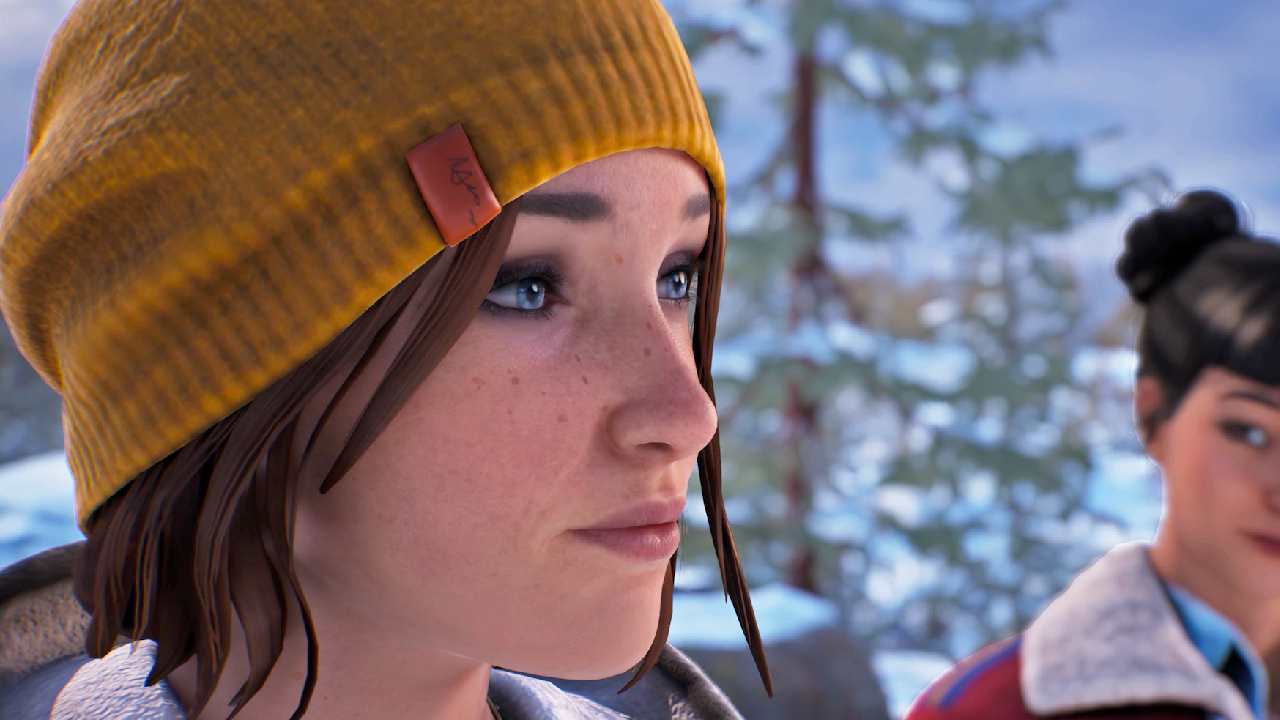
True Colors took us to Snowy Colorado and put us in charge of a new protagonist called Alex Chen. Everything we’d come to expect from the series was, once again, present: great music composed by angus & julia stone, an interesting town full of characters to talk to, and Arcadia Bay original Steph even returned to run the music store and radio station. The narrative wasn’t quite as interesting in some places, but the dramatic feel of the series was there.
If there’s anything that we can track so far, it’s that continuity between teams actually matters, and I did some digging that showed some shocking results. Many of the Deck 9 team who worked on Before the Storm also worked on True Colors. For example, Zak Garriss, who was a writer on Before the Storm was made game director of True Colors. David Lawrence Hein also stayed in place to produce both games. These are individuals who took over from Dontnod’s original team and were immersed in the storytelling and vibes of Life Is Strange. By the time we get to 2024’s Double Exposure, they’re all gone. It’s no wonder, then, that Double Exposure feels like such a departure from the other games.
Another throughline that we can identify is that each new Life Is Strange game had a new protagonist. And yes, that includes Before the Storm because we played as Max in the original. This gave us new powers and new perspectives as players, and it allowed the development team to explore new areas without all of the baggage of the previous games’ narratives. And I think this is the crucial component that Double Exposure missed, because making us play as Max again was just a poor decision, and Max is my favourite Life Is Strange character of all time. So, having looked at Life Is Strange as a whole, let’s circle back and discuss whether Double Exposure is a worthy successor to Life Is Strange and the wider franchise.
Is Life Is Strange Double Exposure worth playing?
Double Exposure was an enjoyable game, let’s get that out of the way. But I don’t think that it was a true spiritual successor to the other games. The narrative was too loose and confusing, the musical soundtrack lacked impact, and there were far too many unknown characters in my texts and DMs. It really felt like they threw Max into the game so that we would buy it, and then they added some small callbacks like having Joyce and Victoria on the in-game socials to appease long-time fans. But it didn’t work because it all came out feeling a bit lifeless. There was so much potential for Double Exposure to either carve out an interesting new saga in the series with a new character, OR put in the effort and go deep on it being a sequel to the original game by tying up Arcadia Bay’s loose ends and so on. In the end, I’m sorry to have to say that Life Is Strange Double Exposure is a good game, but it falls short of what fans expect from a Life Is Strange game, and I don’t feel right saying that it’s a worthy successor to the series. Can you?
Read our Only Lead Can Stop Them review here.


