
The Best Console Nobody Bought – The Sega Dreamcast
Sony, Microsoft, Nintendo – these are the 3 companies everyone thinks of today when we talk about video games, and there’s a very good reason for that. These are the three companies that have dominated the video game industry for the past two decades. They’re the companies that each person who plays video games feels an affinity with in one way or another. Maybe you prefer PlayStation’s big budget exclusives about an angry dad and his annoying son, maybe you like Xbox’s story about a chef in space who falls in love with an AI and fights aliens, or maybe you feel more at home with the cozy gaming nature of Nintendo’s tales of plumbers and capitalist raccoons who trap you on an island and extort you for a mortgage on a tent. There was, however, a time when there were FOUR companies who made amazing video games. During this period, one of the most important video game consoles ever was created; it was a console that shaped the course of modern gaming and laid the foundations for all the great games we know today. The catch? Nobody bought the console. I am, of course, talking about Sega and the Dreamcast console. This is the story of the best console nobody bought, and why it matters to you today.
Sega Dreamcast Development and release
To understand the truly innovative nature of the Sega Dreamcast and why it remains important to us today, we need to go back to the year 1997. It was a time when Sega was in a state of limbo. In 1988, they had released the Sega Genesis console and had great success with it. It was a generation that spawned all the greats we know today, like Streets of Rage, Golden Axe, and more. The console Sega made to follow up on the Genesis in the mid-1990s, the Sega Saturn, however, struggled against Sony’s PlayStation 1. That’s why in 1997, Sega tasked two teams to find a way to compete with the other Japanese giants leading into the 32 bit 3D boom. One of these teams was led by Hideki Sato, a veteran of the company who had joined in 1971 and was director of research and development on Sega’s previous hardware projects.
In contrast to the Saturn, which used lots of proprietary hardware that caused issues, the Dreamcast was conceived as a console that used off-the-shelf components. This meant that developers could easily make games for it and it would keep costs down, a tactic that also let Microsoft’s Xbox 360 win out over the PS3 ten years later. Sega worked with Microsoft to create a custom version of Windows that ran on the Dreamcast and would make porting PC games to the console simple, creating as few barriers to entry as possible.
In one of the shortest development times known to man, the next year, in 1998, Sega revealed the Dreamcast console at an event in Tokyo. It was slates for a release in that November in Japan, but it wouldn’t hit North America and Europe until almost a year later. Despite this, everything seemed to be coming up roses for Sega. The Sega Dreamcast was designed from the outset as a sixth-generation competitor; one that would go head to head with the PlayStation 2, Xbox, and GameCube. It was the first of these consoles to release, so Sega was way ahead of the curve when it came to the timing of their console. The Dreamcast was also technologically innovative, using a PC-like operating system to ensure that they would get ports of PC games. They even built a PC modem into every unit so gamers could play online, which was an absolutely groundbreaking move pre-2000. Sega clearly had the foresight to envision the directions of gaming and had set themselves up for success in every way possible, except there was a spectre looming dark over their strategy.
See, Sega’s previous console, the Sega Saturn, was only on store shelves for a mere two years before being pulled. The console had been expensive, and most game developers skipped porting their games to it because its proprietary hardware meant that it just wasn’t worth the time and effort to design their games on the Saturn. Sega lost huge sums of money during this time, and it’s the reason the Dreamcast was pushed to market so quickly. On top of this, to create, market, and ship the Sega Dreamcast had cost the company half a billion dollars, which was an enormous sum over 25 years ago. Sega had rolled the dice on their new console. They had put everything they possibly could into making the Dreamcast a success. So, when it came time for release, Hideki Sato and the Dreamcast’s development team watched with bated breath to see what their future at the company would look like.

Reception and games
On November 27th, 1998, the Sega Dreamcast launched in Japan, but its launch wasn’t without hiccups. While the mishandling and early shelving of the Saturn had soured Sega fans expectations, there was still a very significant proportion of players in Japan willing to fork up their hard earned yen to pre-order the console. However, in another of a long series of awful events that would eventually lead to the company’s downfall as a console manufacturer, Sega realised they couldn’t physically fulfill all of the pre-orders that were coming in. This is because there was a significant shortage of PowerVR chipsets at the time, and these chipsets were used to manufacture the Dreamcast console. The situation was so bad that Sega had to actually stop taking pre-orders for their console, leaving vast sums of money on the table; vast sums of money they needed to recoup their previous losses. In the end, Sega stopped pre-orders after a mere 80,000 orders, but Damien McFerran of Nintendo Life estimates that had this shortage not occurred, the company estimates it could have shipped up to a whopping 500,000 units at launch. When the Japanese launch day eventually rolled around, every shop in the country had sold out of Dreamcasts, with estimates putting total number of consoles available – with pre-orders – at around 150,000. If there hadn’t been chip shortages and Sega had been able to ship a full 500,000 consoles at launch, the console gaming landscape might still have 4 companies duking it out right now.
While the Japanese launch didn’t go well, the North American and European launches gave Sega a chance to rectify the issues they encountered, but just like Lemony Snicket, the series of unfortunate events just didn’t end for the company. Before the Dreamcast had even launched in the US, Electronic Arts made a public announcement stating that they wouldn’t be supporting the Sega Dreamcast. This was mainly because the two companies couldn’t find common ground when it came to licensing EA’s sports games, so despite EA’s fortune being built on the sports games they produced for the Genesis, Sega decided not to pay the hefty fee EA was looking for. Sega had just bought a studio called Visual Concepts, who made NFL 2K and would go on to spawn the 2K sports series that is still with us now. Therefor, they didn’t see a need to get further in debt for a genre they already had covered.
Things did, however, start looking up for Sega as they approached the North American release. Peter Moore, who would later go on to work at Microsoft and EA, led a viral TV campaign to get folks interested, and by launch day, which was September 9th 1999, over 300,000 Dreamcasts had been pre-ordered. On launch day itself, Sega broke their own record for number of consoles sold and earning the company $98.4 million. Moore called it “the biggest 24 hours in entertainment retail history”. Within two weeks, sales reached over 500,000 , and by Christmas, Sega held 31% of the video game market share. One month later in October, the Dreamcast hit store shelves in Europe, and sales followed the same trend, reaching a million consoles shipped in no time. Everything was coming up roses for Sega, so what went wrong? How did Sega go from smashing sales records to pulling the Dreamcast from sale two short years later?
The answer lies in what the competition was doing. Sega might have arrived early to the sixth generation market, but Sony’s PlayStation 2 console was announced right before the Dreamcasts launch, somewhat disrupting Sega’s plans. The PS2 had a revolutionary DVD-Rom drive that allowed for huge game sizes, and Sony CEO Ken Kutaragi said it would allow them to “convey unprecedented emotions” in their games. Sony also made sure to let players know that their PS2 was up to three times more powerful than the Dreamcast. While this might have been hyperbole, Sony was taking direct aim at Sega, and it worked. Narratives were starting to form that the PS2 would render the Dreamcast obsolete immediately.
That same year, Nintendo also announce their first foray into disc-based console gaming with the GameCube. They stated that it would meet or exceed anything available on the market at the time, which was a bold claim and only added to the competition. In a twist of fate, Microsoft also announced its very first console with the original Xbox. Bill Gates had seen success in Windows PC gaming with hits like Age of Empires and Flight Simulator, so he was keen to bring Microsoft’s prowess to the living room.
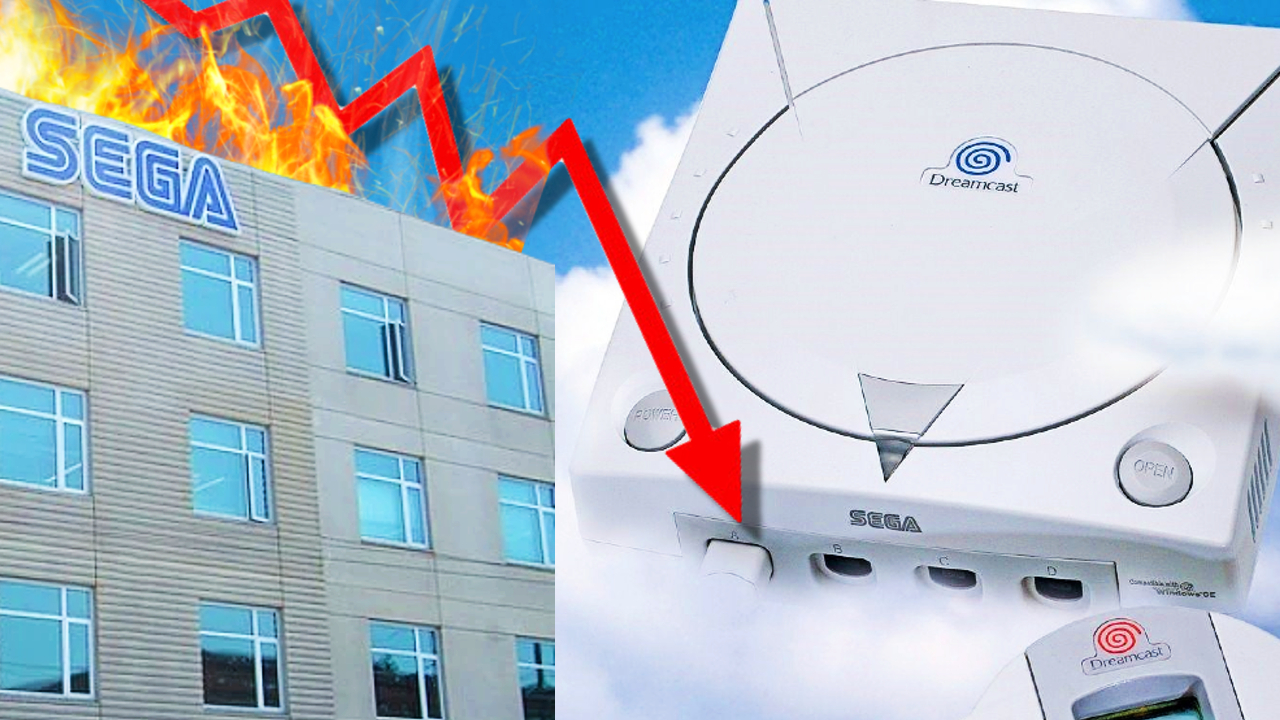
All of this noise from competitors led to Sega’s profits plummeting. While the Dreamcast still sold decently, the company continued to invest lots of money into marketing, which ended up putting them at a loss. In 2000, they even tried dropping the price of the dreamcast to $149 to compete with the Playstation 2, which cost double that. But it wasn’t enough to stop Sega’s downward spiral. In January 2001, Sega announced that it was discontinuing the Dreamcast, after posting a loss of over $400 million. They were down but not out, stating that they would reorganize the company and focus on becoming the third-party publisher we all know and love today. Even though things didn’t work out for the Dreamcast and Sega fans, the console left a mark on the video game industry in the form of an amazing legacy of great games and franchises.

Legacy
With all this talk about The Dreamcast’s downfall, it might seem tempting to think of this as a period of failure for Sega; a time of barren decay. In reality, although it might seem contradictory, this was one of the most fertile times at the company according to outlets like IGN and Newsweek, who said “from Sonic to Shenmue, Sega’s programmers have produced some of the most engaging experiences in the history of interactive media.” Despite its short lifespan, then, the Dreamcast had prompted a lot of developers to make innovative and unique games, and we continued to see these games release even after the Dreamcast was discontinued. In fact, the Dreamcast library ended up at a sizeable 600 games by the time all was said and done.
It wasn’t all about sheer number of games coming out though, it’s also about their unprecedented quality. The Dreamcast era saw Sega bring its arcade classics into the living room, allowing us to play like Crazy Taxi and House of the Dead on our chonky boi TVs, rather than in getting our shoes sticky in the arcades. Side note: who did that? Which one of you was throwing gum on the floor? I WANT TO KNOW DAMNIT. During this period, we also saw some of the most unique game concepts to ever be created. Take Jet Set Radio for example – a game about a bunch of irreverent skaters who take over Tokyo and graffiti up the place to a great soundtrack. This game is often cited as one of the prime examples of Sega’s winning creativity during this period because it popularized the cel shaded art style most associate with Nintendo’s later Wind Waker game. Then you have the groundbreaking online MMO game Phantasy star online, which was WAY ahead of its time considering MMOs didn’t even gain mainstream popularity until 2004’s World of Warcraft. We could keep naming game after game, but with all this talk about the Dreamcast’s best titles, Shenmue. This slice of life Japanese RPG had simulated day and night cycles, variable weather, NPCs that went about their daily lives, the ability to closely examine everyday objects in the world, and even gave us quick-time events in their modern form. The impact of Shenmue on the gaming world cannot be understated. It laid the foundations for Sega’s later Yakuza series, and it showed execs that gamers do in fact want to have experiences outside of their own culture. There’s something about Shenmue even today that captures the imagination. Going back to pre-2000 Yokosuka and using things like payphones is a time capsule that no one can take away, and the game’s world is so enchanting that there is still a strong community around the game that can be seen in websites and YouTube channels like Shenmue Dojo.
Even though the Dreamcast went up in flames and took Sega’s console manufacturing dreams with it, the company managed to successfully pivot towards being a game developer and publisher. Their new Visual Concepts studio spawned legacy sports brand 2K with their NFL and NBA 2K games which are, in one form or another, still around today. This is symbolic of the lasting legacy that the Sega Dreamcast has had today, and we need only look at modern hits like Alien Isolation and Persona to see that Sega has managed to stay at the top of its game in the quarter century since its last console.
Now, let’s do a comparison. This is the Dreamcast controller. This is the original Xbox controller. Notice the similarities? That’s right, the layout is practically the same, including the triggers. The Xbox controller even quote unquote borrows the same letter placement for the buttons, only swapping the colours around a bit to stop being a full-on rip off. That’s because Sega and Microsoft looked at the Xbox as a kind of successor to the Dreamcast in some ways. Around 2000, the idea was floated that the company should sell themselves to Microsoft before going bankrupt. While that never happened, the two companies formed close ties. This can be seen in the release of games like Shenmue II and Jet Set Radio Future on the Xbox long after the demise of the Dreamcast. Sega supported Microsoft’s Xbox console with great vigour in those first few years of change because the symbiotic relationship benefitted them both: Sega could keep selling their games to a large audience that didn’t benefit their main competitor Sony, and Microsoft got lots of third-party support for their first ever console.
From those early days finding their feet as a publisher and developer, Sega has only been on an upward trajectory since. The studios they own now include heavy hitters like Creative Assembly, Two Point Studios, Amplitude and more. They’ve also published franchises like Bayonetta, Total War, Yakuza, and too many others to list. In a strange twist of fate, all of the the success that Sega has today can, for the most part, be traced back to the Dreamcast’s failure. It’s clear to see why the Sega Dreamcast was and still remains so important to the legacy of Sega, and the greater video game industry at large, today.

The Sega Dreamcast was a console that deserved better, and part of its legacy is a tragic one. The console had cutting edge online features, one of the best libraries of games in existence, and it provided a great alternative to the other three major games companies. To see all of that go down the drain due to poor financial decisions around their previous console, the Sega Saturn, is heartbreaking. In the changing landscape of the late 90s and early 2000s, the Dreamcast faced a series of unfortunate roadblocks. The PS1 had captured the world’s attention, and the moment the PS2 was announced, it overshadowed anything that Sega could do or say. The console also faced stiff competition from the Microsoft’s Xbox, the new kid on the block, and Nintendo’s first-ever disc-based console. Each company promised consumers that its offering was the best choice; that their console was the bold next step in video games that you simply needed to possess. And so it was that the Sega Dreamcast fell by the weyside, beset by problem after problem that had nothing to do with how good the console was.
But the other half of the Sega Dreamcast’s legacy isn’t so tragic. The other half of the Dreamcast’s legacy is a positive one. While the Dreamcast had only lived a mere 2 short years, and despite causing significant job losses and major restructuring, Sega Still came out on top, even if it isn’t in a way they (or we) imagined. Sega embraced their new role as game publisher and found success, gaining ground over time and delivering some of our most beloved franchises. Without the Dreamcast’s failure and their renewed focus on games, Sega might not have been spurred on to create everything that they have, or maybe it would still be locked away in Sega’s walled garden on whatever consoles they developed next (and boy, let me tell ya, I don’t have space for 4 consoles).
In the end, the Sega Dreamcast left a lasting legacy in the wake of its destruction. It left a staunch Sega community that still rallies around its products and fondly remembers the times when there were 4, not 3, major console manufacturers jockeying for space in the video game industry. In the end, the Dreamcast was – and remains – a social and cultural success, even if it was a commercial failure. In the end, the Sega Dreamcast was the best console no one bought.
Read the untold story of how PlayStation almost lost it all.


