
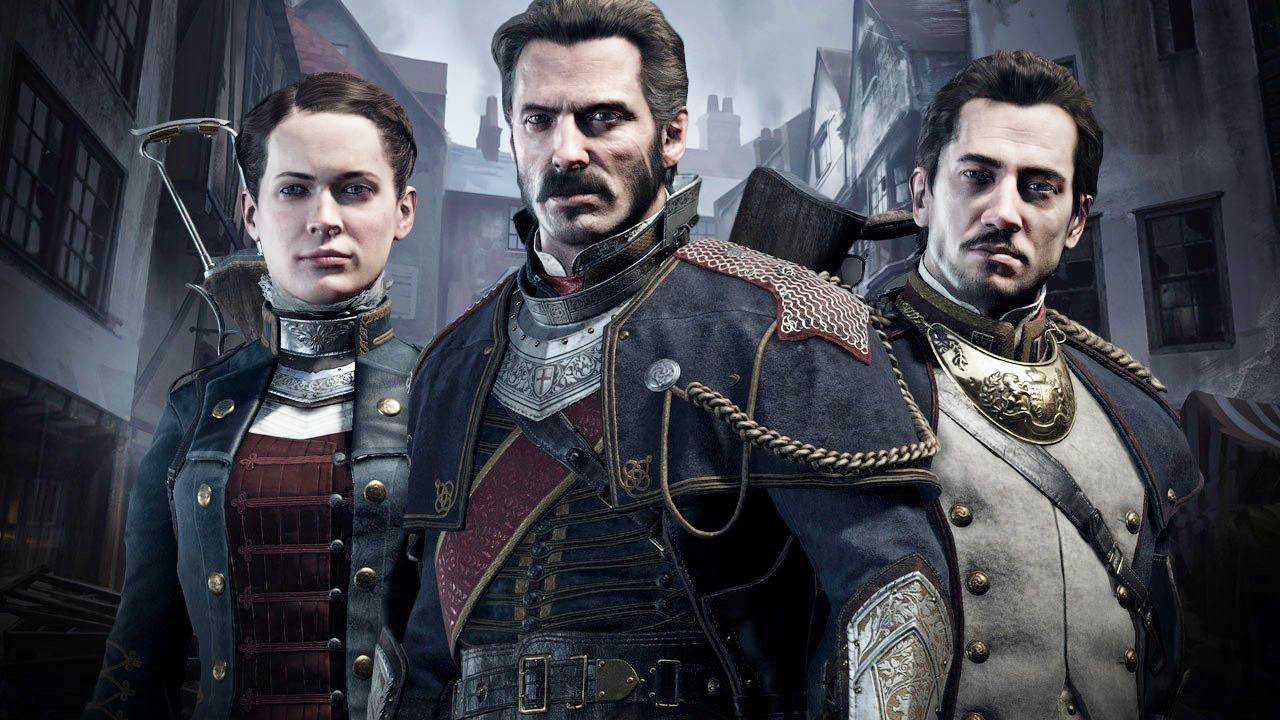
The Order 1886 – was it really that bad?
The Order 1886 remains a divisive game to this day. It received a lot of criticism from gamers and the media about its short length, QTEs, and lack of overall player control. But is it really as bad as its reputation would lead you to believe? 10 years later, let’s look back and see how the game stacks up now that we have the benefit of more context and time.
A game about the Knights of the Round Table in a steampunk rendition of Victorian London, The Order 1886 puts players in the shoes of Galahad and friends fighting a supernatural enemy. Namely werewolves, lots of werewolves. Sounds like a cool premise, right? Many people thought so too, especially from the trailers they showed and at the time when the game came out.
The Order 1886 was released on February 20, 2015. It was barely a year after most people were getting their newly released PS4s and looking for something new and exciting that pushed the limits of Sony’s new console to the max, and this seemed to be it. The gameplay trailers showed us fighting bad guys on the gritty streets of steampunk London, boarding giant zeppelins, and fighting off supernatural creatures in the darkness. For all intents and purposes, this was the next Sony exclusive that would wow and impress.
The hype for The Order 1886 was real. From what was shown off before release, the game had cinematic black bars and some of the most polished graphics ever seen in gaming. The cutscenes looked amazing too, and in fact, The Order 1886 was on a lot of Sony marketing material at the time, with even PS4 console boxes advertising the game. The game’s developer, Ready At Dawn, was keen to promote this as a true next-generation title.
Despite The Order 1886’s glossy coat of graphics, however, eagle-eyed gamers noticed something that started to concern them – this was Ready At Dawn’s first real game. Previously, they’d only worked on God of War: Chains of Olympus for the PSP and some remasters. They had not worked on a fully-fledged and independent console game with a fresh IP from the ground up.

On a personal level, I had the game pre-ordered, but due to being a poor student at the time and having these misgivings, I decided to cancel my pre-order. When the morning of February 20, 2015 rolled around, I scoured the internet for a consensus on the game. I remember clearly reading posts on forums from players saying that they had already completed the game and that it wasn’t worth the steep price tag. Surely they couldn’t have beaten the game already.
But these reports turned out to be true. Alongside media reviews of the game, those who had played the game generally weren’t that gushing about it. Not only did critics find the game too short, but also that it was full of quick-time events and cutscenes, which meant that the time you actually spent playing the game was even less than the 7 hours of stated playtime. The Order 1886 was accused of being nothing more than a tech demo for the PlayStation 4, and it’s hard to argue with this point of view.
The Order 1886 did have some advocates though, and thus the divisive opinion about this early Sony exclusive was born. There were two camps: those who decried it for all of its faults and those who praised the game’s storytelling and graphics. Now that we’ve got some perspective, what’s the truth about The Order 1886?
Replaying the game 10 years later, there are a lot of things that stand out to me. The story is interesting, and taking King Arthur’s Knights of the Round Table and transporting them into a steampunk Victorian London makes for a compelling setting for a game.

This feeds into the graphics, which still look very good today. With these two aspects combined, things like the Knights’ uniforms and their weapons take on unique styles. You’ll find more traditional looking revolvers and mauser pistols, but other weapons like some of the rifles take on a more futuristic vibe. Likewise, the uniforms take trendy cavalry uniforms of the time and modify them with more practical straps and armour that are more appropriate for the knights.
The gunplay and movement still feel smooth and cinematic by today’s standards, but it’s clear to see why this area was criticised at the time. There’s no way around it, The Order 1886 is a cover shooter that feels close to something like Gears of War. The difference? Gears of War came out in 2006, almost a decade before The Order hit store shelves.
From this, it’s clear to see why The Order 1886 took a lot of flak for its gameplay at release. While I enjoyed romping through the cover shooter gameplay, the marketing of the game from Sony lead players to believe that this was pushing the envelope and something that could only be done on PS4. Graphically that’s true, but its core gameplay loop hadn’t yet moved on from the days of the PS3 and Xbox 360.
Retrospectively, we should look at Ready At Dawn’s PS4 shooter with sympathy. The game was first announced in 2013 and had been worked on for years before that during the PS3 generation. Ready At Dawn’s CEO and creative director Ru Weerasuriya even stated that The Order’s gameplay inspiration came largely from Uncharted 2 – a title that came out in 2009.
So, ultimately, we should have seen the signs. Does that mean The Order 1886’s combat is BAD? No. If you like cover shooters, it’s actually quite fun. It’s not the star of the show and it certainly isn’t anything innovative, but if you play games more for their narrative and cinematic experience, then this aspect can be overlooked quite easily.

What can’t be overlooked is the quick-time events. During this era of early PS4 and Xbox One, quick time events were readily criticised. They were seen as a PS3-era trend that needed to go away. It isn’t, however, the fact that quick time events are simply present in The Order 1886 that was such a big deal but the fact that they were a binary pass or fail, which meant you HAD to get them right that frustrated the community.
Likewise, dated gameplay mechanics can be seen in the stealth sections. One particularly gnarly stealth section in the airship level was almost unplayable. Players were forced to creep through a vast chunk of the airship avoiding enemies. If spotted, a short cutscene would play showing Galahad getting killed and maimed.
It was silly mistakes like this that contributed to the game’s overall failure and tarnished reputation. While effort and resources had been pumped into the graphics and overall quality of The Order 1886’s storytelling, little thought had been given to pushing the boundaries of its core gameplay.
When you add in the number of times the game wrestles control from you through cutscenes and quick time events, it’s not surprising that many in the early days of the PS4 passed on The Order 1886. Games like The Last of Us had already established what gaming could be if you invested more resources towards innovation and Uncharted 4 was just around the corner, showing what you could do with an on-the-rails narrative.

To keep this spoiler-free, I’ll just say that The Order 1886’s story is quite compelling, and the game sets up for a sequel despite its short length. After replaying the game, I would go so far as to say that we should actually get a sequel. Let me tell you why.
Over the years, people’s perception of The Order 1886 has shifted. Creators like Luke Stephens have gone on the record to say that The Order 1886 is more of a wasted potential scenario rather than just being an outright bad game. And after another short 7 hours with the game, I agree.
What’s refreshing about The Order 1886 is that it was a fresh IP with an original idea. That’s something we simply don’t see a lot of anymore now that game publishers are concerned with pumping out skins and loot boxes to nickel and dime you.
The Order 1886, for all of its flaws, also has gorgeous graphics and effects. This is partly why a sequel to The Order 1886 would be such a good idea. Imagine the game releasing today and using the power of the PlayStation 5 and 4K HDR technology that most gamers now possess.
Another reason they should make a sequel to The Order 1886 is that with some small tweaks to gameplay mechanics to remove some of the frustrations, The Order 1886 could easily become a far better game. So making a sequel that makes those small adjustments and that utilises the power of the PS5 could make for a really good next-gen experience.
To wrap this up, we have to come full circle and answer two questions: Was the Order 1886 really that bad and how does it hold up 10 years later?
In February of 2015, when players were tired of the long Xbox 360 and PS3-era shenanigans, The Order 1886 was a major disappointment. The game’s original concepts were lost in a sea of frustration at gameplay, length, and cost. The game defied expectations and was not how it appeared in its marketing material. This led to a swathe of gamers who quickly turned their attention elsewhere once they heard the negative hubbub surrounding the game, whether they had actually played it or not.
10 years later, we can see the game in a better light. Yes, some frustrating sections in the game make you want to throw your controller. It doesn’t really innovate in its cover shooter gameplay either. And at 10 hours to platinum, it could do with having more replayability. But The Order 1886 really isn’t that bad in retrospect.
Those who value a good narrative and enjoy cutscenes will find The Order 1886 a worthwhile experience, albeit with some frustrations that still need to be pushed through. It might not have been worth full price, but it’s certainly worth the few bucks it’ll cost you in a PlayStation Store sale today.
In the end, The Order 1886 is a game that had tons of potential and could have been so much better with a few nips and tucks here and there. That’s why I would love to see a sequel to The Order 1886 drop on modern consoles.


