
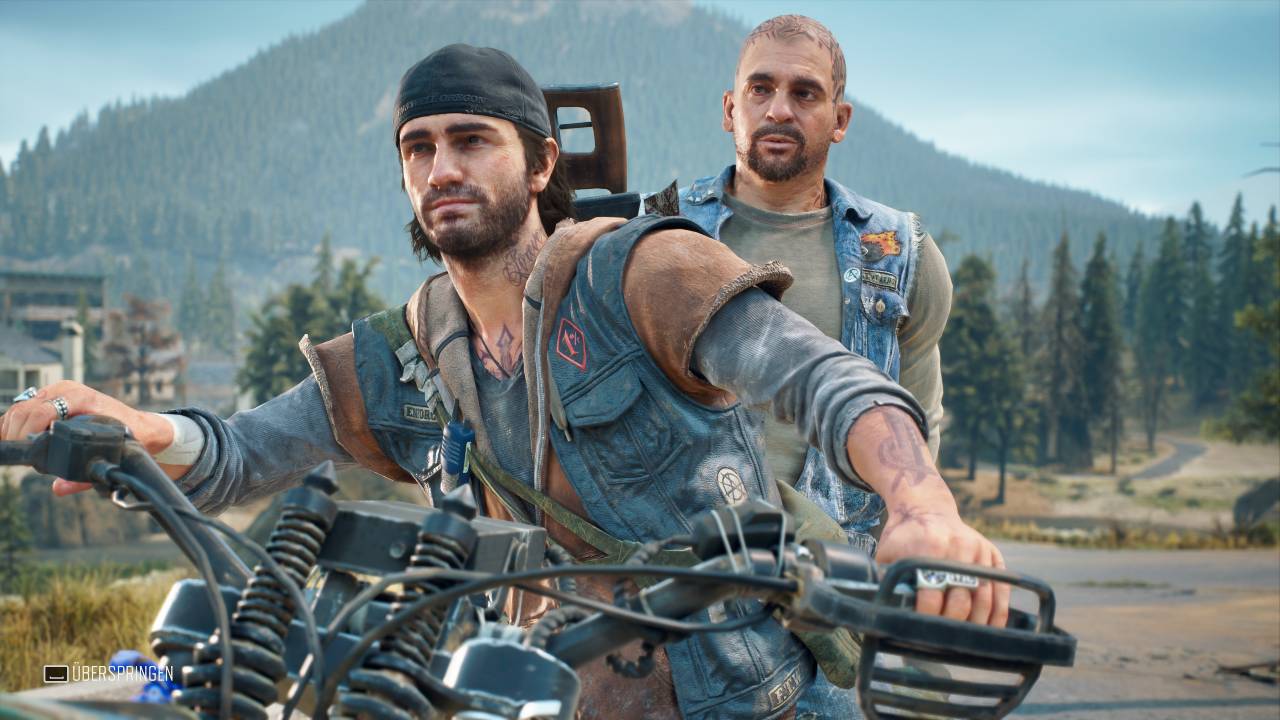
Revisiting PlayStation’s Best Worst Exclusive – Days Gone
There’s no PlayStation exclusive that has straddled the line between good and bad in the eyes of critics and players more than Days Gone. On paper, it had all the necessary ingredients to be a smash hit, but in reality, while it would end up selling around 9 million copies, it released to a dull thud that hardly anybody noticed. While I played the game at the time, I’ve revisited Days Gone to see whether we were justified in thinking it was all just a bit meh, or whether a combination of wrong time, wrong place meant that Studio Bend was unfairly criticised for their take on the zombie apocalypse. Here’s why Days Gone is PlayStation’s best worst exclusive.
Premise of Days Gone
Days Gone has an image problem. Coming out in 2019, the game was conceived many years before it would release. This meant that the development team’s ideas were coming from the height of the zombie survival craze, and this can be seen in the significant focus put on deacon and pals being bikers and traversing the landscape by motorcycle. It doesn’t take a scientist to look at how popular the Walking Dead’s Daryl Dixon was to realize that Bend thought it would be a good idea to take that concept and run with it. They were right, but also wrong. When loading up Days Gone on my PS5 with the hindsight of 5 years and a more critical eye, I immediately noticed the sheer cheesyness of it all. Biker boys Deacon Saint John and his thoughtfully named best bro boozer first appear as caricatures of your quintessential lost in life biker pals. The problem being, of course, is that nobody wants to play as a pure villain for 30 hours of gameplay, so Deacon and Boozer are the good bikers; the tame anti-hero types who help people.
This is quickly established during one early cutscene where we see them force a scientist to take Deacon’s injured girlfriend onboard his helicopter to get her to safety as the apocalypse is beginning. Time goes by and Deacon and Boozer keep to themselves as aptly named drifters, doing odd jobs for different camps to get by. This whole time, Deacon assumes his girlfriend is dead because he heard of a helicopter crash, but anyone with two braincells and carpel tunnel from too much gaming will be able to spot this set up miles away.
The zombies-not zombies are called freakers in Days Gone, and this is perhaps one of its most annoying facets. Yes, there are different types of freakers in the game, and their zombification is slightly different, but I’m sure anybody in the modern world would call these things zombies 5 seconds into the apocalypse. They sure wouldn’t go out of their way to come up with a shoddy name like freakers. In any case, these undead beings have swarmed the Pacific-Northewest and make Deacon and Boozers lives very difficult indeed.
The premise and set up of Days Gone, then, is all a bit generic and cheesy in its attempt at seriousness, but there’s a lot more to a video game than its basic concept. And as we’ll see, Days Gone manages to transcend these shortcomings more and more as you get further and further into the game – something that reviewers failed to do at the time.

Gameplay
Generic biker characterisation aside, traversing Oregon on a motorcycle is actually great fun and adds a number of interesting twists on the standard formula seen elsewhere. In other zombie survival games – State of Decay, for example – you generally travel around in cars, and that in itself gives you protection from all the nasty, flesh eating enemies trying to get at you. In Days Gone, freakers, wolves, and ambushers can knock you off your bike. This becomes a particularly scary experience when you’re riding near freaker nests at night. One aspect of the motorcycle experience that both adds and subtracts to the immersiveness is the need to gas up your bike with fuel. At first, this seems like a fun mechanic that adds realism to the game, but you soon realise that your bike needs filling up often, and running out of fuel in the middle of nowhere soon becomes no fun at all, because you have to scavenge for it and chances are you’re nowhere near civilisation. You can only fast travel if you’re with your bike and it has enough fuel too, so one of the first upgrades you need to purchase at a mechanic is the fuel tank capacity.
Speaking of upgrades, Deacon’s motorcycle is clearly one of the most significant parts of the game, acting as a kind of third protagonist. There are mechanics at various camps around the game’s map that offer upgrades if you have the moolah, and these range from engine power to tyres and exhausts – all of which give you performance upgrades like making less noise or more turning ability.
Another focal point of Days Gone’s gameplay is combat. Deacon can spring and roll to avoid enemy attacks, pick up melee weapons to cave in freaker heads, and use a plethora of ranged weapons. To no one’s surprise, Deacon can use Daryl Dixon’s crossbow as one of the primary ways to silently take out bad guys. There are other weapons ranging from sniper rifles and shotguns to full on machine guns for taking down the huge zombie hordes this game is known for. Clicking in the right stick while aiming slows down time, giving you time to aim.
But it’s not all freaker fighting. Days Gone also has human enemies. These mainly come in two forms: generic bandit ambushers that have camps around the map, and the RIPPERS. The latter are weirdos who believe the freakers are still people and like to torture and cut anyone who doesn’t agree, and they have a leader straight out of mad max.
You’ll spend a lot of time listening to your motorcycles V-twin engine rumble as you cruise through Oregon’s open world, tackling missions given to you by different factions. You can also burn freaker nests to lessen the number of freakers roaming the map, go hunting for pelts to trade for money and XP, and follow main mission storylines. Basically everything you would expect from an open world game.
But while this all sounds generic, Days Gone has a certain je ne sais quoi to it. And it’s in this gameplay loop that I started to see beyond the facade. Days Gone’s various freakers all have different behaviours, charging in hordes or ducking your bullet time aiming. The most poignant of the freakers are Newts, who are zombified children that scurry away from danger and make cute noises. That is until you get too close and they attack. Or the girl you find in an abandoned town, still clinging to a picture of her mother who disappeared months ago, convinced she will come back.
One of the camps you deal with is run by an anti-government prepper, while another basically enslaves anyone they can find to use in their work camp. Deacon will occasionally come across people in the wild who need rescuing, then it’s your job to choose which camp to send them to for money and XP. This adds a real moral dilemma to Days Gone’s gameplay, and is just on example of how the game veers away from being the generic schlock it was received as at the time.
One of the promises Sony Bend made to gamers at the time was that you could take on hordes of freakers in a way no other game had done before. They showed this feature off a lot in trailers before the game came out and a lot of the fanbase was excited. The problem is that, in reality, it’s a late game mechanic, so most players and reviewers didn’t get to experience a lot of hordes before turning off the game. When you do get to fight hordes, it’s an impressive display of the sheer number of freakers that can be displayed on-screen at once, and like a puzzle, you’ll have to lay out traps and plan ambush areas full of explosives to stop them clawing your face off. Once ready, you can aggro these bad boys and kite them around your slalom course of deadly explosives until there’s no freakers left. It adds a fresh take on the standard zombie formula, but it’s just a shame that most people are put off by Days Gone’s early game.
Deacon also visits certain areas to remember and reflect on his apparently-dead girlfriend. During this time, you get to watch flashback cutscenes that fill in and expand the story of what happened and character lore without front-loading the game and bogging it down. And it’s when you pay attention to these small details of game design that you start to realise that Sony Bend was actually kind of genius when they thought about the format and layout of how the story would be told. Once you start to actually PLAY through Days Gone and pay attention, you start to realise that the game doesn’t deserve the negative attention that was heaped upon it way back in 2015.

Reception and revelations
See, as you play though Days Gone, the cookie cutter characters start to develop into complex ones. For example, at first, camp leader Iron Mike’s stubbornness in appeasing the ripper cult appears to be due to sheer naivety, but in a later mission you realise he wants to have peace with the rippers because of the violence he already experienced at the start of the outbreak.
And later on, without spoiling anything, the game’s map opens up a lot more, and the gameplay changes significantly as the freakers are dwarfed by other threats that crop up in Days Gone’s main story. In 2019, when the game released, this was a sticking point for audiences who thought that reviewers didn’t talk enough about this later portion of the game that clearly takes what you’ve come to know and expect and subverts it.
In fact, the game fell fairly flat with critics in general. The Guardian gave it 3 out of 5 stars, IGN gave it 6.5 out of 10, and GameSpot sank as low as 5 out of 10, calling Days Gone ‘mediocre’. Meanwhile, the audience score sits at 8.5 out of 10. But this very situation is symbolic of why Days Gone has been overlooked and misaligned through the years.
If you take the game at face value, Days Gone appears to be a fairly standard zombie survival game with some boring protagonists and themes. And if you make a beeline through the game’s main story missions, that’s what you’ll mostly find for the first half of the game. But if you take your time to follow up on side missions, you’ll get to hear extra dialogue that give you subtle hints to other events and characters in the game. As you explore Nero checkpoints and listen to voice recordings, it starts to fill in what happened for the region to be infested with freakers and the research Nero is trying to do. And if you push through your prejudices and stick with the game and let it play out, then you’ll find that Days Gone is more than the some of its parts.
Of course, the game isn’t perfect and there are strange janky situations like in many open world games, but if you manage to complete a whole playthrough of Days Gone, you’ll realize that a lot of what you assumed to be generic and boring was a set up for the second half of the game that nobody bothered to talk about. If you play a couple of hours and assume that you’ll just be lurking Oregon’s forests and doing pointless missions, which seems to be what most people do, then you’ll just tell you friends it’s a pointless game that isn’t worth your time. Unfortunately, that’s what happened to the game when it first released. Because of this, it failed to really grab the audiences it deserved. This is why Sony ended up deciding to cancel Days Gone 2, which was at one time in production.
Days Gone had the misfortune of coming out at a time when most gamers had been through the zombie decade that was the 2010s. Telltale’s The Walking Dead had drawn us all in hook line and sinker, but by 2019, we’d had enough of fighting the undead over and over again and interest in the genre was waning. Combine that with a poor reputation garnered by reviewers and players who subsequently didn’t give the game a chance, and Days Gone was just too much of an unknown for most gamers to spend their hard-earned cash on. This only made matters worse, of course, because the number of people who reached far enough into the game to see the poignant pay offs was only a sliver of what it should have been. This led to Days Gone being the maligned, red-headed stepchild of PlayStation exclusives.
But revisiting the game 5 years later, I was surprised at how well it held up. Zombie games aren’t as prevalent these days, so I didn’t feel burned out by the game’s premise. The quality of games today has also worsened, and we’ve seen titles like The Lord of the Rings Gollum be absolutely shocking, which puts into perspective what a bad game actually is. We’re also severely lacking on original games that require a leap of faith right now, with publishers and industry giants only approving sequels they know will sell.

Is Days Gone really that bad?
This all leads me to consider one question: what if Days Gone released today? It would almost certainly get a better score than 5 or 6 out of 10. Players would also likely relish a new experience that wasn’t call of duty modern warfare 546 or Far Cry 200. The only word that comes to my mind when I think of Days Gone today is robbed. Days Gone was robbed of the chance of success due to bad timing. Players were robbed of a great experience that they didn’t give enough time or credit to because of the poor reviews that failed to factor in half of the game. And we were all robbed of Days Gone 2, which we probably could have been playing now to inject some originality into an industry that has stagnated due to past corporate successes.
In the end, if there’s one thing that Bend could have done better, it’s pacing. Days Gone starts off slowly, and you’ll find yourself still being tutorialized hours into the game. This extends to locking away all of the game’s best parts into the second half of the game. In an attempt not to overwhelm players, the developers went too far. This meant that all of the fun stuff shown off in trailers – and all of the plot twists that happen later in the game – were only experienced by a small percentage of players who kept playing. Features like taking on giant hordes of freakers only appear later in the game for plot reasons, so you’d be forgiven for playing 10 hours of Days Gone and thinking that it’s nothing like the trailers they showed. This, of course, wasn’t helped by media outlets who, for the most part, failed to even talk about (or reach) half of these mechanics and features that are unlocked later in the game.
So, while Deacon’s biker boy drama set against a backdrop of zombie apocalypse might appear generic and trite at first glance, there’s so much more to Days Gone than its popular perception would have you believe. Yes, it takes a while to get going, and you’d be forgiven for thinking that it’s gameplay loop is basic to begin with. But give the game half a chance, and you might just be shocked at how much the game surprises you by subverting your expectations. Days Gone really is PlayStation’s best worst exclusive.
Read our article on why The Order 1886 is underrated for more.


