
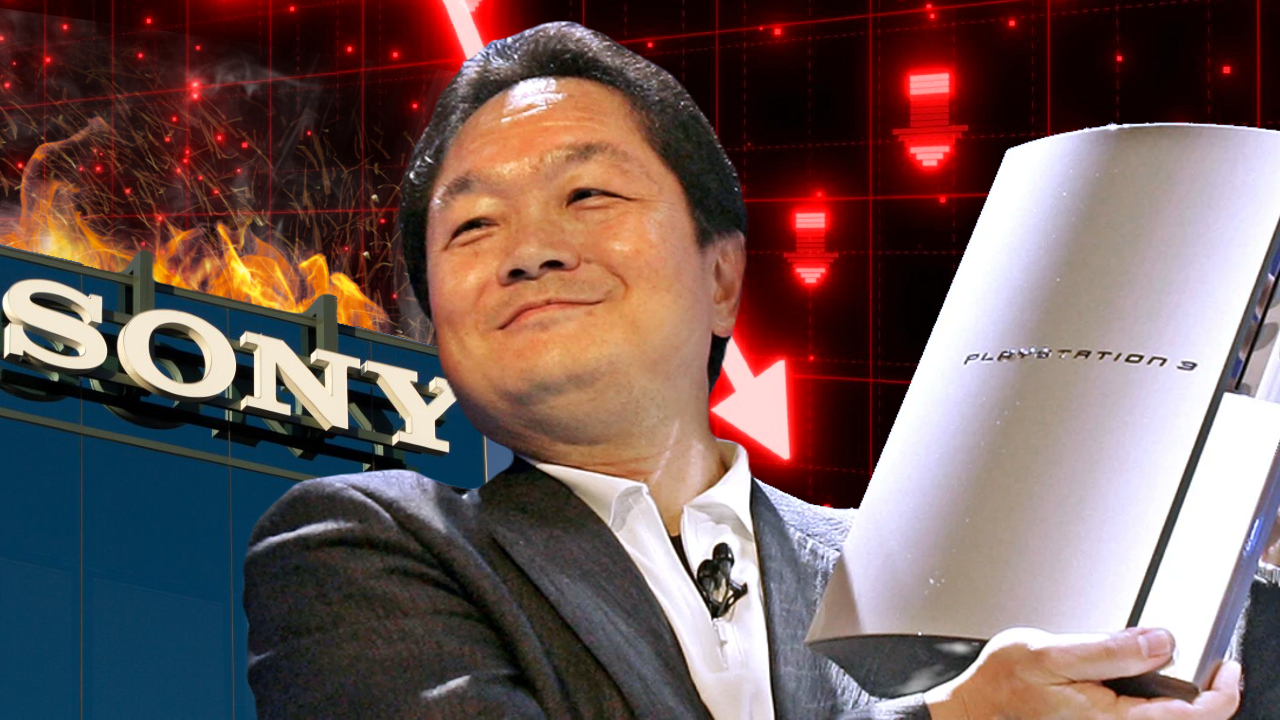
The Time PlayStation Almost Lost It All
PlayStation can be many different things to many different people. For younger players, the PS4 and PS5 represents what it means to be a top-tier console manufacturer and game publisher, delivering big budget, polished experiences like Horizon Forbidden West, Ghost of Tsushima, Spider-Man, Death Stranding, and more. Older gamers look back fondly on the PS2 era as the rose tinted heyday of PlayStation, remembering classics like Killzone, SOCOM us navy seals, Ico and Shadow of the Colossus, Sly Cooper, GTA San Andreas, Devil May Cry, Final Fantasy 10, Yakuza, and a ton more classic series that started on Sony’s best-selling console of all time. It hasn’t, however, always been this way. Contrary to what you might think, Sony’s PlayStation consoles haven’t always been guaranteed to find success and an audience willing to buy their products. There’s a time in between the crazy success of the ps2 and the amazing experiences of the PS4 and PS5 where Sony almost gave up making video games for good. And it’s in this between time that PlayStation almost lost it all due to Sony’s sheer arrogance and hubris.
This period in question is, of course, the PS3 era. A quick glance at sales statistics from Sony’s own website will tell you that the PS3 sold more than 87 million units, and that sounds like a lot. So what’s the big deal? I hear you say. Well, as is often the case, the cold, hard numbers don’t tell you the whole story. PlayStation had to claw and fight its way to this number (which tracks until 2017, by the way), and it’s a miracle that they managed to sell enough PS3s to stay in business in the end, only being bailed out by the ps4 and Xbox’s mis-steps in the next generation. But we’re getting ahead of ourselves. To understand how this all happened, we need to rewind all the way back to the PlayStation 1 console to understand the Japanese giant’s mindset.
PS1 – the new kid on the block
We take Sony’s console prowess as a given today, but the PlayStation 1 was an accident. Back in the early 1990s, Sony was a huge player in the music and movie business, but they were just starting to dip their toes in video game waters. The corporation approached the biggest player in gaming, which was Nintendo, and offered them a partnership. Sony envisaged a world where the new CD-ROM revolution could transfer to video game consoles, which would allow games to have a much larger file size. This meant that games could be larger, longer, and feature cutting edge graphics, because up until that point, the standard method of storage was cartridges. You know, those things you blow in for luck before slapping into your N64?
Sony’s proposed Nintendo partnership would have them making a CD-ROM add on for the SNES console, but in one of the biggest mistakes in gaming history, Nintendo laughed Sony out of the room. This was the catalyst for the PS1, because team blue didn’t just give up. They decided to make their own games console, with blackjack and hoo-. This console would end up being the PlayStation 1, which released in March 1994. It would be a direct competitor to the Nintendo 64 and go on to trounce it by selling four times as much. I bet Nintendo regretted that one.
Nintendo aside, many of the game series we know and love today had their roots in the original PlayStation. Ground-breaking horror survival game Resident Evil, action platformer Spyro the Dragon, psychological horror Silent Hill, Punk Rock classic Tony Hawk’s Pro Skater, Kojima’s Metal Gear Solid – these games, just a drop in the ocean of everything that came out for the console, all landed to great success on Sony’s first console outing. And they were right. The CD-ROM drive they installed in it allowed for movie-like cutscenes, breathtaking-for-the-time graphics, and full fat experiences. It’s with the ps1 that Sony cemented in stone what it was to be a PlayStation gamer, and the audience loved it, which was reflected in the console’s sales numbers, which put it at over 120 million consoles sold by the end of the generation. PlayStation was here to stay.

PS2 – gods among men
6 years later, in October 2000, Sony’s PS2 console hit store shelves. They used the same strategy that they had the first time around and put cutting edge tech into their latest console. The PS2 shipped with an in-built DVD drive that could not only play games from DVD discs but also allowed users to watch DVD movies. This was a completely revolutionary experience at the time, and it was priced far cheaper than standalone DVD players, which only added to the value proposition to those looking to buy into Sony’s latest hardware.
The PS2 would give us some of the best games of all time, and spark many of the franchises we still love even today, like God of War, Yakuza, Ratchet and Clank, and the first 3D Grand Theft Autos to name just a few. So everything was looking great for Sony. They had built a sequel to their ground-breaking first console, and this one was selling even better. Except, there was one problem that was steadily growing larger and larger. There was a new opponent on the horizon in the form of Microsoft’s Xbox console.
See, Sony hadn’t been the only company to realize that video games were growing ever more popular, and with it, the amount of money you could make from getting into the console game. Enter Bill Gates. Microsoft had been formed in the mid-1970s as a computer software company, and originally focused on developing the Windows operating system we all use today. But Gates had big ambitions, and so it wasn’t long before the company started dipping its toes into hardware and PC gaming in the form of Age of Empires and Flight Simulator, to name just two. Now on the cusp of a new millennium, Gates wanted to break into the console market. Cue the original Xbox’s release in 2001, just one year behind the PlayStation 2. But that year mattered. The PlayStation 2 would sell 150 million units in its lifetime, becoming Sony’s best-selling console to this Day. In comparison, the new Xbox kid on the block sold just 24 million units.
It was with this period, at the end of the sixth generation, that Sony was at their height. They had successfully launched two consoles, each one being adopted by more people than they could have hoped for as a new brand, and they could do no wrong. At least that’s what they thought. This time in gaming history is marked by Sony’s success, but leading into the PlayStation 3 era, they had let this success go to their heads. Sony had become arrogant because they had yet to fail, but failure was very much on the horizon.

PS3 – the time PlayStation almost lost it all
Today, we look back fondly at PS3 games. Game franchises like Uncharted, Infamous, Demon’s Souls, and many more all trace their origins back to Sony’s third console. By the end of the PlayStation 3’s life, its full catalogue of amazing games showed what the console was capable of, but the picture was very different at the start of the PS3 generation. This is the generation when PlayStation almost lost it all.
To get a full picture of how calamity almost befell the PlayStation brand, we need to look back at the PS3’s rocky start, and its competitor, the Xbox 360. In some kind of deranged role reversal cosplay, Microsoft and Sony, for some unknown reason, actually flipped tactics with their console releases. The Xbox 360 came out in November 2005 at a price of $399. The PlayStation 3, however, wouldn’t hit the market until November 2006, and Sony was asking an eye-watering $499 for the basic 20gb model or a ridiculous $599 for the 60gb model. I don’t need to tell you that that’s almost PS5 Pro money right there, and this was two decades ago, where you could buy a house for a packet of hubba bubba and a handshake.
The reason the PS3 was so late to market was that Sony was busy tinkering with all the latest technology, like installing an in-built hard drive and blu-ray player. This cutting edge tech also came with a hefty price, driving up costs across the board. But in doing this, the company that had garnered breakthrough success with the ps1 and ps2 forgot what had actually made them so successful. Being early to market with the ps2 allowed most folks to adopt it before the Xbox, and the ps2 had a huge catalogue of must-have games. Sony had also ensured to make its previous two consoles affordable and great value, meaning it wasn’t a stretch for most families to pick up the consoles. All that had gone out of the window when the PlayStation 3 came around, and that allowed Microsoft’s Xbox 360 to shine.
While the Xbox 360 was technologically inferior to the PS3, it was cheaper and launched a whole year earlier. The launch titles for the 360 were farely sparse, but players could still play Perfect Dark Zero, Call of Duty 2, horror classic Condemned and a bunch of sports games on day one. The benefits of upgrading to the Xbox 360 were also clear; you would get powerful graphics and even HD support for new-at-the-time flat screen LCD TVs. Most players, myself included, picked up the Xbox 360 for a multitude of reasons, but one of the main ones is that we just didn’t want to wait a whole year and pay hundreds of dollars more. And by the time the PS3 did launch, the 360 had even more hit games, like Call of Duty 3, Gears of War, The Elder Scrolls Oblivion, Saints Row, and loads more. While some of these titles also came to the PS3 – and the console did have launch titles like resistance – the top tier of games like Metal Gear Solid 4 and uncharted wouldn’t start landing until around late 2007 and 2008. This meant that it wasn’t until 3 years after the 360, when must-have exclusives came out and prices dropped, that the PS3 really started to gain a larger audience who could afford it.
One fact that’s often forgotten is that the PS3 was notoriously difficult to develop games for. The console utilized what Sony called the CELL processor, which was just one proprietary component of many that the company had overengineered. In using such specialist hardware, they alienated many game developers, who decided to only release their game on the 360 because of its off-the-shelf components and ease of use. This led to PS3 games being worse ports than their 360 counterparts, with graphics looking worse and things like loading times being longer in some cases.
It’s still mind-boggling today that PlayStation chose to go in this direction, which was in complete opposition to its previous two console launches that focused on accessibility and games. The fact that Sony made such a mis-step and was on the backfoot is even worse when you realize that the notorious red ring of death plagued 50% of Xbox 360 launch consoles, bricking them and forcing customers to ship their consoles back to Microsoft. Personally, I had to send back 3 brand-new consoles to Microsoft in the first year, because the replacements they sent me kept overheating and getting the red ring of death.
Despite a very rocky launch period, PlayStation 3 sales eventually picked up, but it would take years for all but the die-hard PlayStation fans to be won over by games like God of War, The Last of Us, Ratchet and Clank, and so on. In fact, by the end of the generation, the PS3 actually outsold the Xbox 360, with final figures coming in at 87 million versus 84 million by the time the Xbox One and PS4 rolled around in 2013. Even though Sony ended this console generation with a technical win on paper, Sony was actually losing $300 per console at its launch price of 499. This only worsened when they had to cut the price of the console even further once to get people to buy it they realised their mistake.
Sony’s mis-step with PlayStation 3 had allowed Microsoft to gain a significant market share increased over its first console, and Microsoft was riding high from good sales numbers and financial success. So while Sony did end up selling more consoles, it also bled them of lots of cash, which they hoped to recuperate with game sales. But it was a big risk. Around 2010, there were rumors swirling that Sony might not be able to keep making consoles and TVs because their company was taking hits in all sectors. It might seem preposterous now, but there was a very real possibility that the PlayStation 4 wouldn’t happen.

PS4 – saved by Xbox’s sheer incompetence
In contrast to the Xbox 360’s lifespan, which seemed to never end, the PS3 seemingly had just a few short years before the PS4 was on the horizon by the time most people picked up one of its later slim models. But, at a press conference in February 2013, Sony went ahead and announced their fourth console, the creatively named PlayStation 4. Slated for release in November of that same year, Sony was also facing stiff competition from Microsoft’s Xbox One, which was set to release just days later. This gave players a choice between which console to buy at launch, and it wasn’t an easy one. Sony had spent the last generation making up for a bungled launch, so players were right to be cautious about sinking their hard-earned cash into the PS4. The Xbox 360 had been dominant the previous generation, winning over many first-time Xbox gamers that were looking to stay within the Xbox ecosystem because they’d spent years building up their Xbox Live friends list with fellow Halo players. But it wasn’t as simple as it sounds, because in yet another anime plot twist role reversal, both companies overcompensated and changed marketing tactics.
See, this channel’s favourite Xbox bad guy Don Mattrick was taking the reins on the Xbox One release. Despite having a smash hit with the 360 which taught him that players wanted a cheap and powerful console with no gimmicks, he decided that he was going to make the Xbox One ALL ABOUT a gimmick. He bundled a Kinect with every console, driving the price up, and tried to make players pay to play used games on the console. Sony seized the moment, making a video mocking Microsoft about how to share used games, where Shuhei yoshida and another exec simply pass a game to one another. Sony had also learned their lesson from the previous generation and priced the PS4 at $399, meanwhile the Xbox One was $499 due to the Kinect that no one wanted.
So, despite Xbox One having an arguably better launch line-up with Ryse Son of Rome, Dead Rising 3, Forza Motorsport 5, and more, the PlayStation 4 won out. Sony had turned the tides with better messaging, better pricing, and better hardware. By the end of the PS4 generation, Sony was back on top and had sold a staggering 117 million consoles. To add insult to injury, this was over double what the Xbox One had sold.

PS5
There’s no doubt that Sony righted the ship before it could be sunk. The PS3 generation leading into the PS4 was the rockiest road the company had travelled, and it really shook up the execs at the top. While it’s true that the company learned from their mistakes and made good decisions with the PS4’s launch, it’s questionable if that in itself would have been enough to win back players. What really helped matters was Xbox’s sheer incompetence and bungling of the Xbox One, but things could have been very different if someone other than Don Mattrick was at the helm. If Xbox had decided to launch the Xbox One at the same price as the PS4 and without a Kinect bundled in, the gaming landscape might look very different right now.
This leads me to talk about the current gaming landscape. We’ve seen Xbox’s steady decline, as the company lays off staff time after time, all while acquiring gigantic studios like Activision Blizzard and Bethesda but then putting their games on Sony’s console. It seems like team green is going for a software-first approach and making Game Pass the focus of their future. Meanwhile, on the other side of the fence, Sony seems to have gone back to their arrogant PS3 ways, announcing the PS5 Pro at an eye watering $700 without even throwing in a disc drive. Then, there’s their constant dipping in and out of PSVR support and high game prices to deal with too. All in all, no matter what console or company you favour, gaming is in a strange place right now. The PS3 generation is the era when PlayStation almost lost it all, but one fact holds true for both companies today – if both Microsoft and Sony don’t learn the lessons from their past mistakes, then the next mistake might sink them; the next mistake might be the time they lose it all.
Find out more about PlayStation’s best worst exclusive


