
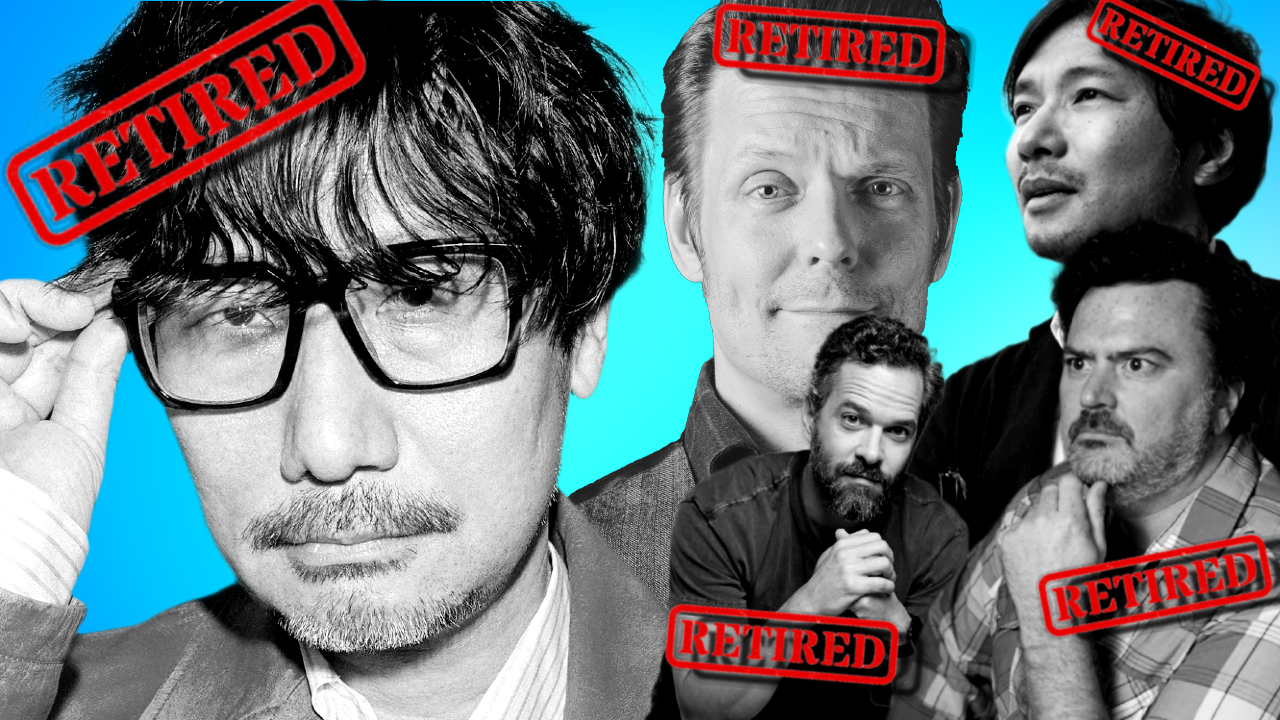
What Happens When There Are No More Gaming Rockstars?
In the beginning, video games were basic; large clusters of pixels that moved with player input. Think Pong or Tetris. But as technology developed, they started to resemble movies more and more. First it was the 3D worlds, then it was the introduction of proper cutscenes. Eventually, by the late 1990s, video games even had music and stories to match Hollywood’s most expensive hits. Metal Gear Solid, Max Payne, Ico, and Silent Hill 2 are just some examples of turn-of-the-millennium franchises that made the world sit up and realize that we weren’t in Kansas anymore, and video games weren’t just wooden cabinets in sticky-floored arcades anymore.
And with all of this advancement came the rise of the video game rockstar; the auteur director whose distinctive personal style and creative control over all aspects of the game shape the entire experience. In cinema, these are names like Ridley Scott, James Cameron, or Martin Scorsese. You don’t need to know what the movie is about, you just need to know they directed it – and video games are no different.
But there’s also a deeper question at play when it comes to the rockstars of gaming, and that is: what happens when there ARE no more gaming rockstars? It’s a question that I certainly didn’t consider until recently, when events at major studios and publishers seriously reshaped how we go about the business of video games.
So, in this video, we’re going to talk about 5 of the most prominent video game directors, how they got to where they are today, what makes their games so unique, and why nobody is taking their place once their careers are over.

Hideo Kojima
Arguably the most well known rockstar slash auteur is Hideo Kojima. He worked on Metal Gear Solid for Konami for so long that they even started printing “a hideo kojima game” right on the front of game boxes and even in trailers. He’s known for his wacky, abstract storylines, and it only got worse when he was fired by Konami and he formed his own studio, Kojima Productions. Once he had nobody reining him in, Kojima made Death Stranding and Death Stranding 2, which go to the very limits of surrealism and break straight out the other side. I mean, the man had become known for turning cutscenes into movies ever since we reached the end of Metal Gear Solid 4 and were forced to watch the madness unfold, but now it was completely unfettered. We shouldn’t really be surprised because he’s been associated not only with all kinds of actors who have appeared in his games but also directors like Edgar Wright and Nicolas Winding Refn.
Whatever you think about the guy, Hideo Kojima has become the quintessential gaming rockstar. Even people who don’t play games have either heard of his name or the work he has produced. And there is no denying that Kojima has increasingly stamped his personal style on his projects to the point that you can now tell that he was simply in the room when the game was created whenever you see a new Kojima Productions trailer. Come on guys, his name is in the STUDIO for crying out loud.

Sam Lake
Kojima might be the king of crazy, but Sam Lake is the king of Nordic Noir. Starting out barely as an adult, Lake was involved with Remedy right from its basement beginnings, writing the narrative for Max Payne. He took inspiration from prominent writer Stephen King, and that can be seen in both Max Payne’s scarier moments but also as a throughline throughout Lake’s career, and is most noticeable in Alan Wake. Despite being so young at the time, Lake and his Remedy colleagues really pioneered Finland’s gaming scene and brought it into the spotlight. It’s crazy he went from this [show pic] to being on stage with Geoff Keighley decades later.
Lake wasn’t just the writer and model for Max Payne, however. He went on to play a crucial role in the Alan Wake, Quantum Break, and Control franchises. Like the other gaming auteurs on this list, most people have an image of Sam Lake pop into their heads when you mention the name Remedy. It’s really hard to imagine a world where the two aren’t connected.

Fumito Ueda
Ueda is perhaps the least known on this list, but he is the Japanese mastermind director behind Ico, Shadow of the Colossus, and The Last Guardian for Team Ico at PlayStation’s Japan Studio. So, while you might have to have a more distinctive taste for Japanese games that run poorly and have no voice acting but tell a beautiful story anyway to know who Ueda is, there’s just no denying that when you play one of his games, you know it.
I mean, this guy made a game where you hunt a bunch of massive beasts in boss fights on the ps2 and turned it into a storytelling masterpiece that brings grown men to tears. No, we’re not talking about that scene, it never happened, UH-UH. Anyway, he is the third of of the so-called video game rockstars we’re talking about, and while he isn’t as well known as some of the others, you know an Ueda game when you see it by the way he meshes desolate beauty in a way similar to Dark Souls.

Tim Schafer
Tim Schafer is another Ueda-like character. He’s an extremely prominent figure to those who grew up with and love adventure games, but he’s not in the mainstream, like Kojima or Lake. He’s perhaps best known for his video game design work on classic LucasArts titles like Full Throttle, Grim Fandango, and Monkey Island. But Schafer formed his own studio called Double Fine who then worked on Psychonauts and Brütal Legend.
I think Schafer’s a great example to talk about because, unlike someone like Kojima, he takes a more laid back approach to being in the spotlight. While he might not make his presence on the team obvious, Schafer’s design-hand can be felt all throughout all the games he’s worked on. If you’ve ever played any of them, you know what I’m talking about – weird-looking characters with eccentric personalities and odd-ball stories. You need only look at Grim Fandango’s setting of the Mexican day of the dead and afterlife to get the picture.

Neil Druckmann
Neil Druckmann is the most recent example of an individual who has risen to make their mark on the gaming world. Starting out as an intern at Naughty Dog in 2004, Druckmann worked on some of the Jak games before moving on to Uncharted and its sequels. Druckmann rose through the ranks quickly at Naughty Dog, eventually co-leading development on The Last of Us, Uncharted 4, and then directing The Last of Us Part 2.
Now, whether you like these games or not, Druckmann is the best example of a game developer who brings a big old bag of emotional punch to cinematic games. You simply won’t escape a game he’s worked on without feeling some kind of way about it, and that kind of way is usually sad and tearful. Druckmann is so central to these franchises that he even co-wrote the Last of Us TV series, and even based some of his games on experiences he had as a child growing up in Israel.
What happens when there are no more gaming rockstars?
Now that we’ve outlined just a handful of the video game developers and directors who have shaped our favorite games, there remains one question that really needs answering: what happens when they all retire or decide to stop putting their creative juices into doing what they do? It’s not a question I had really contemplated before.
Before we delve deeper into that, we need to first look at the problem. All of these developers have been in the industry for at least 20 years but most even longer. Due to this, we’ve just kind of… come to expect that they will always be there. Or, we’ve just kind of assumed that someone will take their place or come along and create some kind of amazing new franchises that have all the vibrancy and personality of our most beloved franchises. The sad fact, though, is they won’t, and here’s why.
See, the time in which our favorite game creators started their careers was a time when video game studios were left to create pretty much whatever they liked. Take Metal Gear Solid, for example. The original game was wacky and outlandish. It had villains with supernatural powers, you had to unplug your PlayStation controller, and the entire story was just completely bonkers. So much so that the game would probably have a hard time being greenlit today, and therein lies the problem. All of these video game franchises were original concepts, and their developers were allowed to just run free and create fresh and new experiences that pushed the boundaries.
In the last 10 years in particular, we’ve slowly moved into a more and more corporatized world when it comes to video games. The bigwigs in the suits and the shiny skyscrapers have ever more increasingly demanded to be shown how a game will make trillions of dollars before it’s even started development. And when that happens, developers can only keep doing what’s worked before, which is how we’ve ended up with 500,000 Call of Duty and Assassin’s Creed games. There’s no longer any room for risk-taking on imaginative new game ideas.
The age of video game auteurs making their mark on the industry by dreaming up innovative games is clearly over, with the top dogs at major publishers and studios just looking to cash in with subscriptions and live-service models. We need only look at the recent events at Xbox to see just how far up the chain this has spread, with layoff after layoff despite companies earning record-breaking profits.
Of course, there are still exceptions to this trend, with the likes of Kojima, Lake, and the others we’ve talked about, but that just brings me to my point: what happens when there are no more gaming rockstars? What happens when the people who have spent the past 2 to 3 decades being innovators and earning both our and their company’s trust are no longer around to do what they do?
I don’t want to sound alarmist, but I think the answer is that we’ll continue to see a decline in the major companies like Ubisoft, Activision, and even Kojima Productions at some point (I mean, the man’s not getting any younger). Indie developers have been picking up the innovation torch and carrying it for a while now, and I think we’ll see that trend only continue to grow as crowdfunding directly from players allows us to vote with our wallets. The next 10-15 years are going to be filled with uncertainty, and I think we’re just going to see more and more cuts to staff at the traditional studios as game directors either quit due to the lack of creative freedom they are allowed, or because they’ve been forced to create sequels to the same franchise over and over until nobody buys them anymore and the money dries up.
Without overstating it, we really kind of are in the end times of traditional video game development. Xbox bought up a bunch of studios and then fired everyone. Their new big strategy is to create Netflix for games, which is the dullest thing I’ve ever heard. PlayStation seems to be giving up on its VR innovations. Nintendo just made a slightly larger Switch and made us pay a boatload of money for it. Heck, even Kojima just made Death Stranding 2, a sequel to his last game, where you walk around carrying heavy things and peeing in bottles. It’s going to be up to individuals and small groups of developers to come up with great new game ideas, then work tirelessly into the night after clocking out of their day jobs. Either way, I just can’t see a way for the meteoric rise of convention video game auteurs in the future. The real gaming rockstars are going to be the indie developers who work to create their passion projects no matter the cost. Think along the lines of Eric Barone, who made Stardew Valley all by himself.
Read about the Xbox layoffs for more


