
Why Video Games Have a Remake and Remaster Problem
Most of us have memories of playing games as kids that fill us with nostalgia. We remember a time when we were playing a multiplayer game with friends and something hilarious happened, causing everyone to break into laughter. Or perhaps it was 2 am and you just couldn’t quit that 2-hour metal gear solid 4 ending cutscene (thanks, Kojima), so you were forced to stay up all night and go into school looking like you had just spent a year in the jungles of Vietnam. Have you noticed, like me, that over the years, the number of new games that really grip you and make you feel something have dwindled into almost nothingness? And don’t you think it’s strange that coinciding with this is the exponential increase in companies remastering and remaking their games, rather than creating new and original IPs?
The number of remasters and remakes has gotten out of control. Don’t get me wrong, I love it when an old game gets remade for modern consoles so that we can play them on devices we own, instead of having to trawl yard sales and dumpsters for greasy consoles that somebody let their teething toddler chew on before throwing it in the back of their closet for 20 years. Let’s take the Resident Evil remakes for example. Resident Evil 2 and 3 in particular were locked on old consoles and unplayable on modern hardware. They were also a product of their time, with tank controls and terrible camera angles that make you want to scream in frustration. So, it only made sense to remake them with an over-the-shoulder camera and all that other great stuff so that we can play and actually enjoy these retro horror games today, rather than just turning on a PS1 for 5 minutes, saying “yeah, i get why people like this” and then never touching it again. Another example would be a game like Shadow of the Colossus, which is a cult classic that was stuck on the ps2 for the longest time.
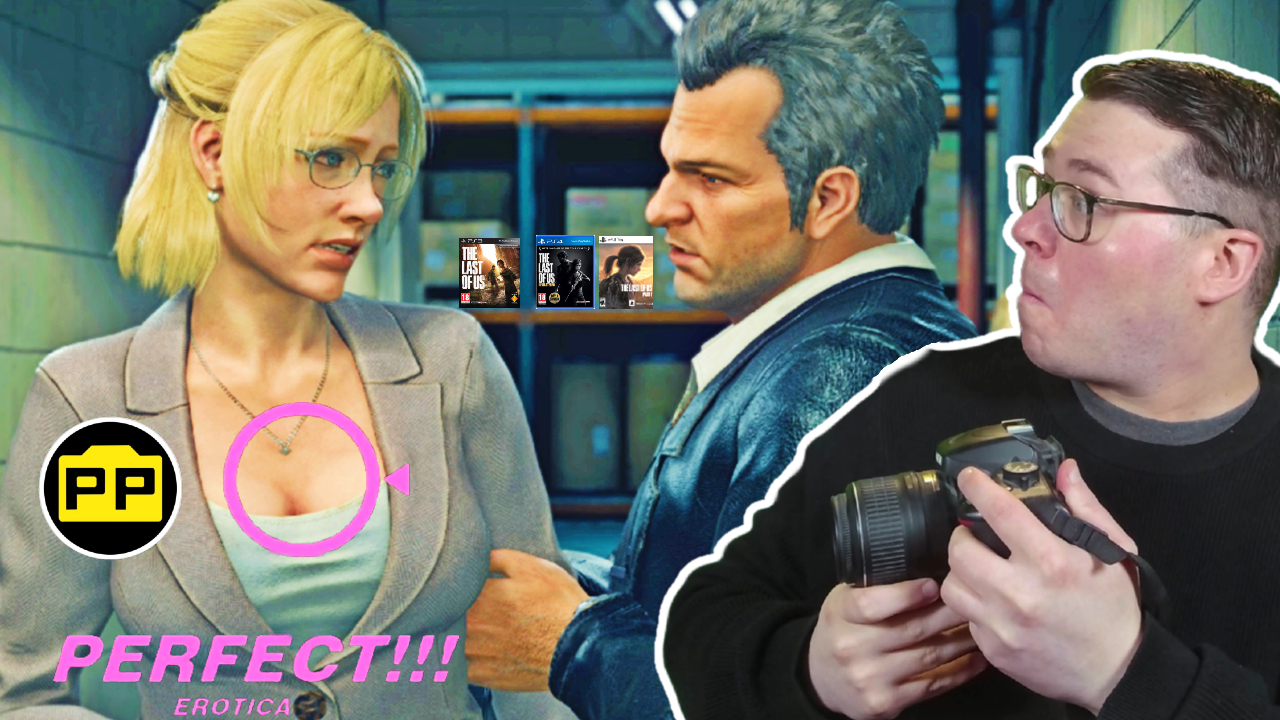
But we now see companies remastering and remaking the same games over and over again for a quick cash grab, and a lot of these games aren’t even old. Look at The Last of Us, for instance. It originally came out on the PlayStation 3 in 2013, then it was remastered for the PlayStation 4 a year later, then it was “REMADE” as The Last Of Us Part 1 in 2022. The differences between these versions? Hardly anything but resolution. But it gets worse. Guerrilla Games released a remaster of Horizon Zero Dawn, which apparently uses all the fancy technology from Forbidden West, but seeing as the original game wasn’t very old to begin with, barely anything changed. In fact, Sony’s first-party studios are one of the most guilty parties when it comes to pointless remasters. You just have to look at Insomniac’s Spider-Man remaster to see how out of control the remaster and remake problem has become, with the remaster releasing a mere 2 years after it first launched.
But the remaster and remake issues don’t just stop at the fact that companies have realised that it’s an easy way to get a quick cash injection to keep them afloat. In some of these remasters, companies are changing aspects of the game that fundamentally makes the game what it was in the first place. Case in point, the Dead Rising remake from Capcom, who decided to change characters and game mechanics so as to not offend anyone. In the original Xbox 360 release, one of the game’s psychopathic bosses was a crazy vietnam war veteran called Cliff who talked about fighting communists and was clearly suffering from PTSD, but the remaster completely rewrote this guy’s backstory so that he now accuses player character Frank West of being a “mole” and “filthy animal”. All references to the conflict were removed, but along with it Cliff’s personality and whole reason that drove him to be the way he was along it. Then you have the fact that Capcom removed the points Frank gets for taking pictures of female characters in revealing poses. Suffice to say fans were not best pleased with these changes, because while it could be argued that some of the aspects are in poor taste today, this game was made 20 years ago – and players just wanted to play the game they remember. The issue is also that changes like these remove context and personality from the game. Taking photographs of women in revealing poses might sound like a good idea, until you realise that it was a way of communicating that Frank West was not a “serious journalist” and that Dead Rising is actually a completely silly and over the top story.

But let’s move on from that. We could discuss whether we need remasters or remakes, and how much developers should change from the original games, and how long they should wait before remaking a game all day. But there’s a larger issue at play here, and that’s why we’re even playing remakes at all. Let’s start in a time long ago, with the PS1 and PS2 era. If anyone remembers that time, we weren’t interested in making sure Atari or Commodore games were playable on those consoles. Instead, we were focused on playing the latest and greatest ground-breaking titles. Silent Hill 2, Metal Gear Solid, Ratchet and Clank, Persona, Yakuza and a whole bunch of other games were all dropping, and nobody cared about their old games. It was all about the amazing experiences yet to come. Fast forward to today, and we have the opposite problem. We’re all too willing to part with our cash for a chance to buy the same game we’ve played a gazillion times over again with slightly better graphics. And, well, why is that?
The short answer, of course, is that video games have, on the whole, become stale. In the years towards the end of the PS4 and Xbox One lifecycle and beyond, the video games industry at large has become more and more corporate, with executives getting huge bonuses while their teams get laid off, which in turn breaks up a studio’s culture because everyone keeps moving jobs every 5 seconds. Whereas games used to be made by small teams led by visionaries like Kojima, games are now developed with the bottom line and the board of directors in mind, and this only results in disastrous consequences. We need look no further than Sony’s hero shooter Concord for an example of a game made by a committee to see the problem at hand. It’s quite obvious that a bunch of Sony suits sat in a boardroom, looked at what Blizzard did with Overwatch in 2016 and what Respawn did with Apex Legends and said “make us one of those games that print money.” They, of course, had no idea of the landscape and what gamers actually want. And this attitude has crept into the rest of the industry. We need only look at Ubisoft and their cookie cutter franchises to see the lack of imagination and originality on display, because no matter what they do, every assassin’s creed or far cry will be just another open-world filled with towers to climb in one way or another.
And this is why remakes and remasters are selling so well right now, and if they’re selling well, then companies are going to keep making them. Because, at a core level, video games WERE better 5, 10, 15, 20 years ago. This isn’t some boomer shouts at clouds take, either – it’s a reality that we can point to and have evidence for. Why would you spend millions making Concord, one of the most expensive shooters Sony has made, when you can just print Shadow of the Colossus on a disc for PS5 and make mega bucks?

This has all led to a lack of fresh new franchises. Big companies are simply unwilling to roll the dice on a new and exciting idea anymore, because fresh ideas don’t have decades of sales statistics that you can point to in a boardroom. And this is also why where we do see innovation in video games, it’s with smaller studios or indie developers. Baldur’s Gate 3 is a great example of this. It was created and published by Larian Studios, and has made the company roughly $260 million in revenue. To put that in perspective, that’s around a quarter of what Red Dead Redemption 2 made, a game that has been out far longer and was made by a huge studio with huge development costs. That’s even more impressive when you think about the fact that Baldur’s Gate 3 is mostly talking and exploring, with some combat thrown in. But it goes to show that gamers aren’t stupid, and that we’re willing to open our wallets for games with interesting stories and writing, not just hero shooters. Indie innovation can also be seen in games like Power Wash Simulator, which asks you to lead another life in which you clean houses for a living, or countless other games with fun, fresh ideas, like Balatro or Inscription.
When it does come to big studios and triple A, then, it’s no wonder that the only games we’re looking forward to are remakes of the classics, like Metal Gear Solid Snake Eater. Because you can throw all the power into a console that you want, and you can make games look as pretty as you want, but that doesn’t make them good. Increasingly, I’ve watched as people around me have started collecting not just retro consoles but more recent ones too. The Wii U, for instance, sold notoriously poorly, but upon revisiting it, the screen in the game pad and the surprisingly good library of games dwarfs what is released today. The Wii U feels like it has personality and soul; it’s not just another black box to run game pass. And that goes for most of the consoles up until the current generation too. Just power up a PS3 or a 360 and see what I’m talking about. Borrow them from friends or family members, or find them used somewhere, but I guarantee you that whatever console or game you choose to try, you’ll find yourself actually having fun.
Find out about Disco Elysium’s sad legacy and sequel.


