
Xbox Is Boring Now, and Here’s Why
There’s something strange going on in Seattle. More specifically, the Microsoft headquarters, where Phil Spencer and his increasingly dwindling crew of Xbox employees plan the future of the Xbox brand. Spencer has been head of Xbox for just over a decade now, and in that time, we’ve seen the company shift its focus and branding many times. First it was about being the most powerful console on the market, then it was about having the most games for cheap. However, it’s never been a more turbulent time for Xbox fans than right now, because nobody knows what Xbox even stands for anymore. Heck, does Xbox even have any fans anymore? Do Microsoft EVEN WANT us to be fans of their platform? Follow me on a journey to explore how Phil Spencer and Xbox went from your cool friend next door to boring corporate suits just like everybody else.
It all started in 2005. Microsoft had just created the Xbox 360 and were quicker to store shelves with it than their Sony rivals, who had trouble finalizing development of their PS3 console. It was this generation that gave Xbox an identity, and increased its user base a huge amount of the original Xbox. Franchises like Gears of War, Halo, Forza, and more were all born or had their golden age on the 360, and even third-party games like Dead Rising and Saints Row were exclusive to team green. For all intents and purposes, Microsoft had carved out a great fanbase who played these games and thought to themselves, yeah, these games I can only play on the 360 is the reason I’m here. Not to mention features like Xbox Live, which was THE place to be for multiplayer gaming at the time.
Fast forward to 2013, and then Xbox CEO Don Mattrick decided that it would be a great idea to really push the newly developed Kinect camera. Ah yes, that’s what gamers want, a camera watching their every move, not good games that would be silly. This train of thought led Mattrick to bundle a Kinect with every Xbox One console when it launched in 2013. He also tried to make the console always-online and make people pay to play used games. To clear up this clown fiesta, Microsoft got rid of Mattrick and brought in Phil Spencer to head up Xbox.
Instead of Mattrick’s fancy suits and clean-cut Japanese businessman stylings, Spencer decided to wear t-shirts to portray a younger and more in-touch Xbox to audiences. He quickly stopped bundling the Kinect with the Xbox One and lowered the console’s price to fix the bad public image that Mattrick had created. Spencer talked more about games and insisted that Xbox stood for the fans. To make good on this promise, Spencer introduced Game Pass to the Xbox platform in 2017. The idea behind it being the tagline “the best deal in gaming.” So, while it was still about the games, Spencer had shifted the conversation from “hey, come play our exclusive games” to “come play all the games for one low monthly price, no strings attached.” This was due to the fact that the company’s exclusives just weren’t being as well received as its competitor Sony’s.
Xbox was supposed to be THE destination to play all of your games, then, and to go along with that was a new console. The Xbox One X, dubbed Project Scorpio, was Microsoft’s shot at their first mid-gen refresh console. They marketed it as the most powerful console ever created, and combined with the Xbox exclusives that were still rolling out, like Sea of Thieves, and Game Pass, they felt like they had made good with Xbox fans – and they had. But what was to come next is where it starts to take a turn for the worst.

In the years since the Xbox One X and Game Pass were introduced, and especially since we got our hands on the Series X in 2020, Spencer has been asleep at the wheel. Lots of the company’s quote unquote exclusive games announced years ago, like state of decay 3 and Perfect Dark, have yet to materialize. And despite buying up companies like Activision Blizzard, it’s been a bit of a let-down from the player’s perspective, because we haven’t really seen any benefits.
It was obvious with the release of the Series X in 2020 that Xbox was kind of done with innovation. This is ironic because the original Xbox was conceived by Bill Gates to bring PC gaming innovations to the living room console, but fast forward 20 years and the opposite is happening. The Series X had the same controller we’ve been using since 2013, and the console itself was just a monolithic black box. Yes, it plays games better than previous consoles, but they didn’t really update much. The UI even remained the same and wasn’t even in 4K.
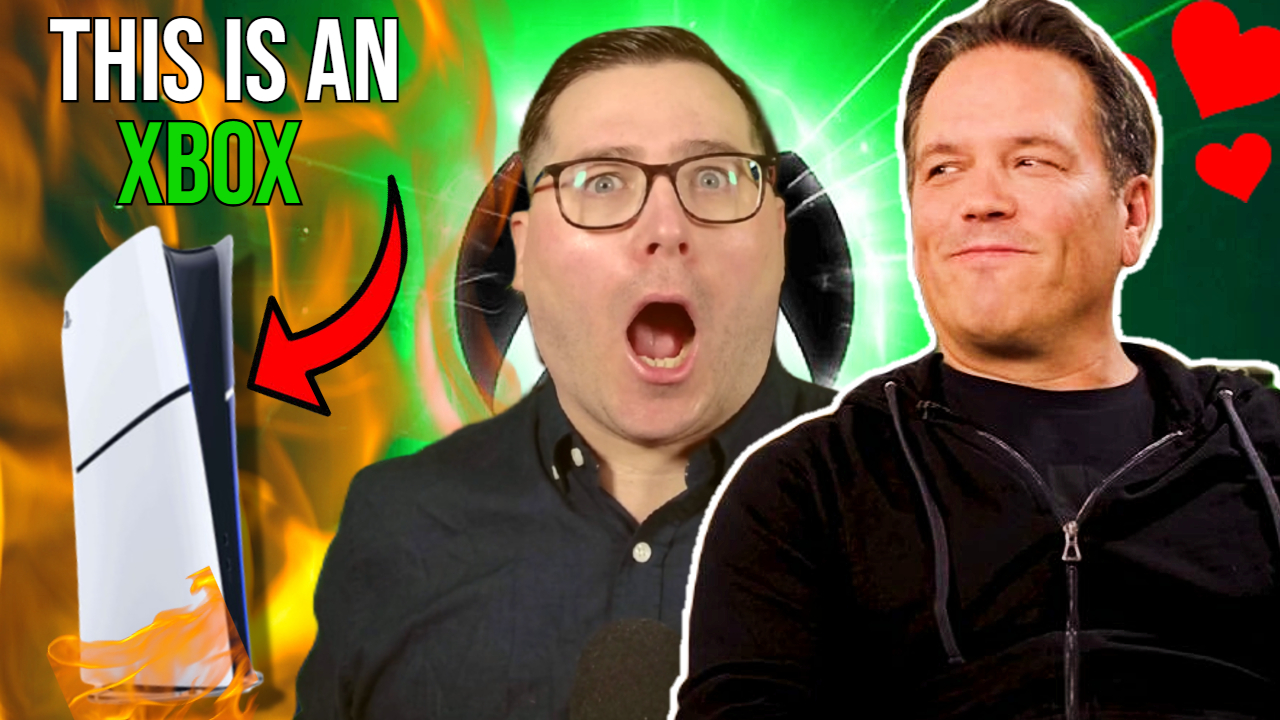
Since 2020, it’s gone even more downhill for team green. First, Spencer implemented a price increase for Game Pass users, making that deal not so great anymore. Then, came the strange this is an Xbox campaign that showed the Game Pass app running on all kinds of devices, which was summarily mocked by the gaming community at large.
For a long time now, Xbox exclusives have also made their way to PC. The argument could be made that Microsoft makes windows and so on, but there’s just no denying that from a long-time Xbox fan’s point of view, this dilutes what it means to buy into the Xbox ecosystem. But what’s even weirder is that these games have now started to come to PlayStation and Nintendo Switch, as is the case with the at one time exclusive Sea of Thieves. Spencer has even recently come out and stated that there are “no red lines” when it comes to what Xbox games will come to other consoles. Rumours are even swirling that games like Gears of War will definitely be hitting the PlayStation 5 this year based on information from industry insiders.

To add insult to injury, Xbox doesn’t even have a plan to create a mid-gen console to combat the PS5 Pro this generation. Remember this because it will be important later. Xbox does, however, seem to be creating some kind of handheld gaming device, no doubt so that Game Pass users can play Game Pass games on the go. But I can’t help but feel like they’re kind of missing the point. There are already a bunch of other similar handhelds out there that do the same thing: Steam Deck, Lenovo Legion Go, Asus ROG ALLY.
Spencer is clearly steering Xbox toward a future where Game Pass is an app subscription that can be played on any kind of modern smart device, which I’m sure makes some kind of sense as a business move if you’re in the hallowed halls of Microsoft’s Redmond office. But it has completely eroded what its hardcore fanbase actually came to Xbox for in the first place – amazing games that can only be played on Xbox. Those who have been buying the company’s hardware and software for many years used to get excited when the newest release came out, but now games just quietly drop on a subscription service and/or other consoles. The way that Sony has also upped their game with PlayStation Plus Game catalog and monthly games has also rivalled much of what Game Pass actually does, diminishing Xbox’s proposition even further.
Let me give you a personal example. I bought a PS5 Pro because I want to play my console games with the best graphics and performance possible. I also love PlayStation exclusives, so it’s a worthwhile purchase for me. However, it also lets me play all third-party games in better quality too. Along with this, I get tons of free games with PS Plus. This has left me Xbox Series X collecting dust because I no longer A) need to turn it on or B) have the desire to turn it on. I’m even holding off playing Indiana Jones or Stalker until they either release on PlayStation or I get around to checking them out on PC because I have so much other stuff to catch up on.
The kicker, though, is that I cancelled my Game Pass subscription long ago. Partly this is because, with the ps5 pro, I don’t want to play games in worse quality, but it’s also because Xbox has become stale and boring. They can add new games to the service, but if your main platform is either PlayStation or Nintendo, then it doesn’t really make sense to keep paying what is now a hefty monthly fee to get games that mostly aren’t even exclusives anymore.

I’m not sure how you feel about Xbox these days, but I’m over them. It’s heart-breaking to say as someone who has always liked and appreciated what Microsoft has done with the platform, but Xbox, led by Spencer, has wandered into the same emotionless grey area as other apps like Netflix. And personally, I don’t think whatever they are doing over there is going to last another decade, even if they quit making hardware and only focus on the Game Pass app.
Xbox started out as an innovator, seeking to bring PC gaming power and exclusive games to the living room, then they made their messaging all about making amazing games for their fans, but somewhere along the way, they decided they didn’t want to fight it out with Sony’s first-party studios and went all in on making games a subscription service, and doing the bare minimum innovation possible. Which has led to even more of its core audience becoming uninteresting and going to other platforms, leading to falling numbers of Game Pass users, which was their end goal objective in the first place. Congratulations, Xbox, you played yourself.
Find out how Xbox lost the console war


